Unreal Engine rolls out Real Time Ray Tracing
 outrider42
Posts: 3,679
outrider42
Posts: 3,679
It is now officially here, ray tracing in video games (aside from 2 commercial releases). Now anybody using Unreal 4.22 Preview can work ray tracing into their projects. But there is much more to this update than simply ray tracing. Every time I mention video game engines can be the future of rendering, the instant retort I see is "But game engines take short cuts!" Ok then, how about looking at just what Unreal Engine can do right now, today? Here is a list of features being rolled out with 4.22.
Rendering Updates:
- Real-Time Ray Tracing and Path Tracing (Early Access)
- Added ray tracing low level support.
- Implemented a low level layer on top of UE DirectX 12 that provides support for DXR and allows creating and using ray tracing shaders (ray generation shaders, hit shaders, etc) to add ray tracing effects.
- Added high-level ray tracing features
- Rect area lights
- Soft shadows
- Reflections
- Reflected shadows
- Ambient occlusion
- RTGI (ray traced global illumination)
- Translucency
- Clearcoat
- IBL
- Sky
- Geometry types
- Triangle meshes
- Static
- Skeletal (Morph targets & Skin cache)
- Niagara particles support
- Triangle meshes
- Texture LOD
- Denoiser
- Shadows, Reflections, AO
- Path Tracert
- Unbiased, full GI path tracer for making ground truth reference renders inside UE4.
- Added ray tracing low level support.
- Runtime Render Graph API
- Preview of the upcoming Render Graph API, only a small portion of the renderer has been converted.
The full update list can be found here:
So...unbiased, full GI path tracing in a video game engine! As the bullet point implies, this mode is not quite real time ray tracing. But this means you can crank everything up and use this mode for still images. I wonder how fast it is?
In case you are wondering, sub surface scattering is already available in Unreal.
Is there anybody out there who exported Daz models to Unreal and tried the new preview in unbiased mode?

Daz 3D is part of 
Connect
DAZ Productions, Inc.
7533 S Center View Ct #4664
West Jordan, UT 84084
Licensing Agreement | Terms of Service | Privacy Policy | EULA
© 2026 Daz Productions Inc. All Rights Reserved.
Comments
It's pretty cool. Unity is doing the same.
Yeah, I think the big game engines are really competing now, and I love it. Just read Unity 2019.1.2b release notes some time ago, and cathed this:
GI: Adding support for the Optix AI Denoiser. The Optix AI denoiser is a deep learning based denoiser trained on library of path traced images. It yields a substantial improvement over existing filter options, especially on low sample counts and it is resilient to leaking. It is currently only available on Windows and with compatible NVidia GPU.
Wonder how fast it's going to be? As a side note, anybody knows if Octane renderer 4 is available for game engines yet?
It is a really exciting time. Unreal and Unity are doing real time ray tracing, and Octane is getting into the act as well.
I read that the experimental version of Octane 4 has Brigade, their real time ray tracing game engine.
I always get a giggle out the opening page for Daz “...accurate character tolerances made Daz a go-to solution on CAPTAIN AMERICA, THOR, and IRON MAN.”.
However, the Unreal engine is quickly becoming the actual method that studios use for these "tolerances". They build sets in Unreal and use these to preview the action IN REAL TIME so the director has an idea of what to do. They may use Unreal to simulate camera angles, preview animation, and more.
For a recent example, the new movie, ‘Welcome to Marwen’ uses Unreal to give real time feedback on the actor performances and lighting. This is from OSF:
"The lighting also involved a lot of virtual production techniques to give the director of photography an insight into how the decisions he made on the mocap stage would actually affect the entire environment in the end result.
if Zemeckis wanted to try out different lighting, blocking, or camera angles, the UE4 team was on hand on-set to update the corresponding digital scene and give a preview of the changes in realtime. (see http://onsetfacilities.com)
Due to the actors performances being so important to the director it was essential to keep them engaged. Thanks to the Unreal Engine realtime feedback it was possible to demonstrate what the changes were actually doing by just checking the monitor which helped the actors by showing evidence instead of just a “Trust me, its gonna work out”. The actors have an instant preview of the finished product there and then.
Once all the performances were recorded, the VFX team combined the footage with hand-keyframed animation on the doll head rigs, going back and forth between the 3D scan of the actor’s head and the doll model to find the right mix of face footage and keyframing. Through this process, the team applied believable, recognisable actor performances to the dolls’ faces.
Beyond providing a means to record and transfer actors’ performances to animated characters, virtual production gives filmmaking crews opportunities for on-set creativity that just weren’t possible before."
“What I love is how virtual production is now being used on-set to increase creative possibilities; opening up new ways for Directors to think, beyond what’s been possible before. Directors are now using realtime virtual methods and technique, on-set” Asa Bailey Virtual Production Supervisor."
Directors are getting more and more comfortable using game engines in their workflow. Now that game engines are getting ray tracing along with Octane, it is only a matter of time before we see final film footage using a game engine for its rendering. Unreal and Unity are already being used for cartoon animation. The day is coming people.
Speaking of Unity, how about a walk through an apartment in Unity? (Not actually ray traced)
Lets stop to think about what is going on here. This is running at 4K, and at that resolution, it is running at around 90 frames PER second. That means that this game engine is drawing an entire picture in less that 10 milliseconds. That is 10 THOUSANDS of a second. This is being done with a single 2080ti and i9 CPU. The CPU is hardly doing anything, though, as each core never breaks over 10% useage. You can also see that the VRAM in use is about 8.5 GB, and this is important to note. This apartment has two floors and several rooms, it is raining, and all of this data combined is only 8.5 GB. Obviously this video is not perfect, it is clear some materials are lacking. But I do not believe that is the fault of the engine, I rather think it is simply the materials used.
What is this video? This video is a demonstration of company that wants to sell clients VR tech for their customers. Like building floor plans in VR so an architect firm can use them to sell these plans to their customers. These are interactive, allowing people to pick new colors and options and see the result instantly in a mostly photoreal way. There is a link on the youtube to the site, where you can download the demo in the video for yourself and try it out.
I hope there will soon be a day when Daz Studio will have a real time ray tracing engine even if it's just NPR quality. I'd like to be able to make animations in something other than basic OpenGL.
I have been using Unreal for over 4 years. I'm not that great at it yet. Though over the last 6 months i have played around sending Daz Models into it. It's really cool. I have not tried making good renders. though i don't have a RTX card yet.
I have used unity also, I don't really like their engine to use. Though I love many games that use it as their engine. UE4 to me is so much more easy and intuitive. I love the BluePrint node scripting it uses. I also like the dev teams and people at Epic. They are very supportive and awesome. Not sure about Unity though.
Epic has been making huge waves lately, and their store takes the big step of offering those that sell there 88% of the cut. That is unheard of. By comparison, Daz offers 50%, which can bump to 60% for "top PAs".
However they have been so aggressive that it caused a backlash when they started getting exclusives over Steam. The newly released Metro game sparked a controversy for being exclusive to Epic. Personally I don't see the problem. I feel like Steam has got very lazy and needs some real competition. Its a non issue to me where the game is sold. But that is another story. Epic on the whole is is stirring up things. They are very active about investing in Unreal and truly want Unreal to be the best game engine around. And they have the money to do this. Unity is pobably at a disadvantage there, and they face an uphill battle.
But that is why I talk about Unreal so much. Things are moving very fast. Unreal is getting constantly improved. Epic has a growing store, not just for games, but the Unreal asset store is also growing (and offering the same 88% cut). I believe that their game launcher will keep improving as well to compete with Steam. So Epic is hitting all fronts.
I think it would be in Daz's best interest to look at partnering with Epic and Unreal as soon as possible to ride this upcoming gravey train. A proper bridge between the two would be a great start. And besides, if game engines really are the future like I believe they will be, this is a train they will not want to miss out on. And I don't mean Morph3D. <.<
I agree, Epic is making so much off of Fortnite BR. They can really fund so much now. Though they were doing this way before Fornite BR though. Giving grants to Indi Game Devs. Epic so much wants their Engine to be #1 , though it's cool they are even selling the games made with other engines. I so hope Daz would work with Epic. Making a bridge between the two is a no-brainer.
When I import Models into UE4 , I also jump into VR and seeing them in scale like that is really cool.
It is clear to me that the next few years will see a dramatic improvement in real-time pbr. From unreal to unity to iclone to blender they're all showing the best there. Now no doubt rendering times and pipelines will see a dramatic improvement and reworking as well. Specially in mid-quality budget scenarios.
Now I guess DAZ has no choice but taking the leap. Probably implementing iray real-time support.
Sounds to me like Daz would dig their own grave if they did that. What Daz has going for it is the higher quality while being easy to use. Realtime just doesn't come close to the quality one person can produce with Daz. Now lets say Daz joins with epic like you suggest. Epic has its own store. What would keep them from offering Daz content in their store if they work close together? Possible even doing the same they do with steam by using fortnite money to buy up DAZ PAs trying to force customers into using their store.
They are. I use Unity because my 7 year laptop is not quite able to handle UE4 so I'm very happy with Unity's modularity.
The graphics in the apartment walk-through are great & high-res and all but they have sort of an unchallengingly lit overcast day look.
Still that isn't the problem in that video, the problem is all that graphics power and still the I/O controller is as jerky and unprofessional and very much 1990s digital mouse & keyboard jerkiness as the 1st Wolfenstein-3D game. When people walk about an apartment their 1st person perspective isn't so jerky. If someone is following someone in an apartment walk-through their 3rd person view is not so jerky. When profressional movies are made the cameras used for either perspective are not so jerky. They need to clean that up.
Id love to see some development for real time, including physics, hopefully this is a feature of genesis 9. It would be great if it allowed for pbr / gi support in real time.
It is indeed where the market is heading at least, with real time prototyping, DAZ could still be a forerunner with its already massive marketplace / backlog and original character bases. Especially for low to mid-tier and indy companies this would be a sure boon and added marketshare.
Since Unity and Unreal are doing all of the heavy lifting
on their side, I think the best approach for Daz would be the
"Live link" approach taken By Autodesk Maya
and recently announced by Reallusion in their 2019 Roadmap
for Iclone Pro.
(Ureal Live link for Maya Video)
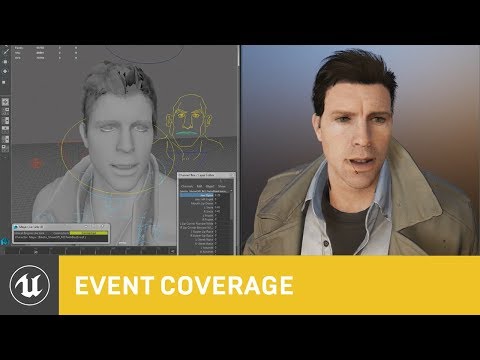
These also looked really great:
Now with Unreal's digital humans ( https://docs.unrealengine.com/en-us/Resources/Showcases/DigitalHumans ) and Unity HDRP shaders not far behind ( https://www.artstation.com/artwork/83EBx ) I have to say difference between 3D rendering program and games is getting smaller and smaller. Hah, and if you combine Character Creator in the loop, whose 2019 roadmap looks great with full game pipeline support ( hair, eyes, skin shaders etc... those interested can look it up from https://forum.reallusion.com/403226/Character-Creator-2019-Roadmap ), it really is looking awesome for Daz models too. Still that being said, I'd love for Daz to really invest to game platform bridge, and hopefully G9 is even better for game platforms.
Or it will be later than you think. No one can really say. Close to all iray images are easily recognizable as not real which means even with Daz there is a good portion of improvement open.
There is also a big difference between what companies can create with hundreds of artists/programmers and millions for budget and what one person can create. Daz is interesting because it allows to do things as a single person. What unreal produces for me on the other side is miles away from that. Even their own character demos or content they make available for use isn't close to what prerendered images look like.
Realtime engines are getting closer so likely there will be a point as you suggest but I don't see it happen the next couple years as the difference is still to big for characters.
If at some point in the future I'm able to create with daz photorealistic images while unreal is just very close but still recognizable as not real the hours of rendering would be still worth it for me.
You wanna bet?
Its almost here as it is. Give people some time and you are going to see some incredible works that most here would never guess was a video game engine. More important, Nvidia has shifted development of Iray off to others, which to me is bad news. I personally do not see Iray lasting all that long. Epic is pouring resources into Unreal, Microsoft is pouring resources into DirectX 12 ray tracing, and Nvidia is also pouring resources into each. Then you have Octane doing their thing, and they are doing gaming engines as well. Where is Iray in all this? I wont say Iray is doomed, but I frankly do not think the outlook is rosy unless something dramatic happens. Iray does not even support the ray tracing cores on Turing yet. The game engines are progressing faster than Iray. For the most part, Iray has not changed all that much since its launch.
I think we will see steady gains in Unreal throughout the next two years, and it will all come together with the next series of GPUs that release. Nvidia will have learned from Turing, and the move to 7nm will result in major gains in performance. I believe Nvidia will launch new cards around the summer of 2020...that's just 18 months from now.
Unreal will be huge in animation. It is easier to pick apart a still image, moving images are more forgiving. You certainly need patience to animate with Iray. With Unreal and gaming engines you can render in real time or close to it. Now that ray tracing is in Unreal it is more a matter of getting the materials right than anything else.
If Daz Studio does not jump into the Epic store, somebody else will. Daz cannot miss out on this chance. Daz has a bit of a head start you could say, so they could get hit the ground running. And remember, Epic gives you a 88% cut, so Daz selling assets on Epic would not be losing much on a sale, while potentially gaining great volume in sales. Especially Daz Original products that they own outright. Just like how Daz sells every kind of preset, you can find every kind of resource on Epic, from models, to textures, to AI schemes, to music. It is safe to say that Daz assets are a leg up on most of what you find on Epic. But most gamers have no idea what Daz Studio is, or that it even exists.
IMHO The future is in realtme visualization ,Games and CG films.
https://venturebeat.com/2018/04/30/newzoo-global-games-expected-to-hit-180-1-billion-in-revenues-2021/
The speed at which Reallusion has announced plans for a Live link to Unreal
indicates to me that their recent addition of IRay to Iclone
has proven to be the blunder that I ( and many others ) predicted it would be.
IRay is Great for the still image pinup/portrait crowd but that is NOT a growth market.
NVIDIA IRAY is just TOOOOO SLOOOOOWWWW for animated filmaking
and the Iclone user base, who was used to realtime ,animation has had to admit this sobering reality.
Must respectfully Dissagree here:
https://forums.unrealengine.com/development-discussion/content-creation/114518-daz-3d-studio-or-iclone-for-character-creation-pros-and-cons
The unreal indie game dev community is well aware of all of the major content & figure animation producers
and with unreal & unity offering their own 3D humans
the competition in this space is fierce.
This is Why Posers future looks quite Bleak IMHO.
You dont find poser being mentioned by anyone outside the existing poser /Daz online communities
I like Iray, and the skin shaders etc. we currently have are really good, but in all honestly, it's getting too slow for still images too IMO. It's not like Iray magically turned slower, but competition has been moving on and on, while Iray is getting next to nothing new, or at least that's how I feel. I don't have Octane, but as soon as they release Octane 4 Blender/DS plugin for free, I fear my Iray days are numbered. Already I've been returning back to Cycles more and more, because difference in speed is staggering. I can only wonder how fast Octane 4 will be. I know there are lots of people who don't mind rendering several hours for one image, but for me that is just unacceptable, when competition does the same job in half or less the time with the same or better quality. Now imagine if game engines can do almost as good job in real time. It's not Daz fault, that Nvidia is not committing to Iray enough, but it's not helping that DS development is excruciatingly slow also.
Difficult to bet on something like that as we likely wouldn't agree on the moment when it's close enough. As I mentioned for me (and probably the majority of Daz users) it's important what one person can do in a short time not what a team of artists and specialists with months of work can create. Them being very close might be deluding until we reach the point where it's something a single person can recreate quickly.
And then what? The next nvidia gpu will likely be the usual 20 to 30 percent performance increase. Even if it would be 50% thats still less to what two gpus are able to do today. Those two gpus today aren't a game changer why would less in close to two years be?
For Daz selling the same content from their own store in a different one would be just a bad deal for them. 12% are 12%.
I agree
You want to get buyers into YOUR eco system where every product there is fromyou.
It is much harder to get your product noticed buried in the cornicopia of someone elses Market.
IMHO Daz's Game content division is doing a Horrible job at presenting Daz content to the indie game community
https://www.morph3d.com/morph-artist-tools
If you search youtube it is hard to find any videos from "Morph3D" Less than a year old
and even those only focus on playing "dress up" with the Characters as still artist do in Daz studio
https://www.youtube.com/results?search_query=morph3d
Game developers want to see the content& Characters being used in the their favorite engines
and demonstrations of the export pipeline.
If you search youtube for "Iclone Character creator 3"
You see examlpes of the Characters used in the game engines as well as
pipeline tutorials for transfering the content to Unreal & unity
The real question I have is: How hard is it to port a Genesis 2/3/8 model into the UE with working rigging and morphs?
I'd love to check it out with my own hands, but if it's manually rigging and configuring morphs... ehhhhhhh I'm not that interested.
I agree the future is real time rendering, which is just the logical end game. A few things to keep in mind.
These beautiful real time demos that we see, archviz stuff in case of that apartment walkthrough, are done by absolute pros, often teams of people, and it mostly looks so good because of those people. You can therefor not directly compare a Daz Studio render most likely done by a hobbiyst to a demo like that. If the same people did that in Iray, provided they had experience in Iray of course, it would look dramatically better still. Those amazing looking digital humans are also a good example. From what I read and as far as I remember, that guy on the top left took a team of people almost a year to make? Game companies also have an armada of artists slaving for years before something looks like Metro Exodus.
A proper bridge between Daz Studio and UE4? Sure, why not. But these are not the same demographic. Daz/Poser has always existed in a sort of parallel universe to the rest of the CG industry. The notion that they now need to somehow join with Epic to survive seems rather a stretch to me. Not to mention, Daz content isn't really made with games or real time in mind to begin with. Hardware is getting stronger so this line between offline and realtime content is going to blur more and more, but today at least this stuff is still optimized to hell and back. The interest on the game side of things for Daz content also doesn't seem tremendously high. Neither is the desire for Daz users to easily take the content into a game engine, which is bazillion times more complicated than Daz Studio.
If anything I think Daz should look into getting a nice little streamlined real time rendering solution into Daz Studio if they wanna hop on that train. A bridge to UE4 is never going to work to such an extend that people could just click a button and it'll look perfect over there. Creating shaders in UE4 is a pretty complex thing in and of itself. The chances of some automatic conversion happening with 100% accuracy or even 75% is practically nil. If people need to touch every single asset and optimize it manually they are not going to bother. So then perhaps sell custom content in the UE4 or Unity marketplace? That could work I guess, but they also already tried it with Morph3D. Admittedly how they approached all this seemed a little weird to me too.
Overall this whole Daz thing is a cute little bubble for a certain niche of people like us and I see no need to burst it because of some game engine trends. If people want real time, get it into Daz Studio rather branching out into the unknown. Even traditional render engines are probably not gonna sit idly by but come up with their own real time initiatives anyway. Octane has already got a finger on real time and is already in Unity, for example.
But bubbles do....burst.
Somebody is going to get the grand idea to use Unreal or Unity as a platform for animation and still rendering as opposed to just gaming. Plus Unreal can be modified and forked, like any game engine. I believe somebody will create a software that uses Unreal or Unity, but will have a different overhead GUI designed for content creators first, and sell high quality content that rivals the models in Daz. And if that happens, that would be quite a missed opportunity for Daz because they could be that company. The demographic gap is closing. Customers are going to choose the fastest and easiest software for their purpose, whether that be Daz Studio or something else. Daz has effectively displaced Poser in the market, something can come along and displace Daz.
Vray is also jumping on the wagon. They are pretty specific here, stating this is intended for non gaming. https://www.chaosgroup.com/vray/unreal
But Vray doesn't have an asset store like Daz, so the door is still open. Still, I find it very interesting that so many companies are working to create bridges and platforms for Unreal and Unity. I think this fact is telling. So Octane, Vray and other render engines are creating lines to gaming engines like Unreal and Unity. Where is Iray in this conversation?
Iray's own developer SDK forum has not had a new post since August 2018. Not a single post, thread or reply, which seems impossible to me. Iray's dev blog hasn't posted since September, and that was only to celebrate its anniversary. It is really hard to find new information on Iray and its development. This forum is just about the only place to find any real info on Iray, and Daz always plays it so close to the vest that we have no idea what is up until it actually releases. It would be really great if Daz would give more info on what's being worked on, that would put an end to speculation. <.<
The time it took to create the demos is not all that relevant. The content you buy from Daz is all built ready and rigged for Daz Studio, and all PAs start from whatever Genesis base there to make a human. We also have people here that create full 3D environments, and they might take quite a while to design. Some PAs are not one person, either, like i13. None of this matters to the end user, though, how many end users make lots of changes to what they buy from Daz? Many users just plug it into Daz, pose and render. That is what an asset store is all about, to provide those assets so the buyer does not have to create them from scratch, saving them time. If you have a modular base human, like the Genesis line is, you don't have to do all that rigging from scratch. That's what I am talking about here. Daz models properly rigged for Unreal/Unity from the start. You don't need to optimize everything, as I said, these are still geared towards content creation, not gaming.
Well Daz Studio itself is free, so really the "only" thinng Daz needs to do is to create a tool that imports DS assets into this would-be future engine and their bottom line is more or less fine.
Yeah I'm not gonna disagree with you an Iray. We discussed this elsewhere already and Iray is not a horse that I would bet on for anything. I find it unlikely someone would branch UE4 and create a software that is specifically meant to compete against Daz Studio though. For that you need content first, and that's really the main problem for any potential competitor. And it's such a niche market to begin with, where would the motivation for that even come from?
Asset stores for Unity and UE4 have existed for a while now, none of that seems to have caused a mass exodus of the Daz/Poser crowd just because that stuff is real time. Like I said, these are different demographics. By all means make a bridge to UE4 but to say this is somehow mandatory to assure the future of Daz is a bit much. Nice to have at most. Keep improving Daz Studio to cater to changing demands, that's way more important.
The big difference here, being animation verses still rendering
Unity& Unreal are game development engines first and foremost.
Games have Animated Characters
The majority of the Daz/ poser crowd have zero interest in anything that actually moves
except to put into a static pose for a portrait or Illustration.
When the Fluidos Animated waterflow plugin was announced for DS
there was a person complaining that it required you to run an animation to get the water
actually flowing.
IMHO All of these exciting developments in high quality realtime rendering are only
relevent to Gamer Developers and us animated filmakers.
Yeah, that's different demographics thing too. Although you could do stills in UE4 if you want. Also, animation isn't done in UE4. It's done in other packages and then imported. So people who want to animate shouldn't point to a game engine as the solution, it merely plays animation typically. Unless maybe you're doing the live action motion rig stuff which I'm assuming is out of reach of most people.
I wouldn't agree with the last point, I find it is relevant for everyone in CG and once the quality of real time becomes so high then who would want to still wait for a render to finish? This is a future we cannot stop I think, but as mentioned I feel the solution should happen inside of Daz Studio. How about getting Marmoset Toolbag in it? It's a perfect match, it's made for basically the same purpose of "create a pretty picture". Something neat and streamlined.
The rendering stills and animation demographics are essentially the same demographic. The venn diagram would be majority overlap.