
Daz 3D is part of 
Connect
DAZ Productions, Inc.
7533 S Center View Ct #4664
West Jordan, UT 84084
Licensing Agreement | Terms of Service | Privacy Policy | EULA
© 2026 Daz Productions Inc. All Rights Reserved.
Comments
The problem with hair is that it's all hair cards. Hair is being treated like a surface, when real hair works like a volume. Particle hair gives a more realistic look because of the fact that you're dealing with a volume of hair. It's still possible to have hair cards treat hair like a volume, but it's extremely difficult and time consuming. Here's are two videos where Hair Specialist, Johan Lithvall, talks about his process for realistic hair using cards. Then there's also the way Iray handles shading hair. In comparison to Blender's Principled Hair shader, for example, Iray's way of handling it leaves a lot to be desired. NVidia needs to update to the latest algorithms for Iray. Imho, the best render engine for organics has to be Arnold. I can only wish that they would release their research papers, so other render engines could adopt them. The way they handle SSS, transparency, and hair is superb!
As for the teeth, gums, and nails, they would greatly benefit from surface displacement, better SSS, and transitional meshes. Here's a link to an article about transitional meshes, in case anyone's interested. The same goes for the tongue, except without a transitional mesh since there's nothing to transition to. Tongues aren't smooth at all. I'd say that it's one of the most textured parts of the body. But because it's always wet, it's hard to tell.
The issues with sclera is that it's often left white, and smooth. Sclera are more of a muted blue color with cream areas, but the contrast of those two tones make them look white. Also, veins in the eyes cause displacement. No one has smooth eyes. Here's someone's process for making realistic eyes.
A lot of the stuff I pointed out is just general knowledge. There are tons of blog posts, videos, and articles made by more experienced professionals that could explain things in greater detail. I just wanted to tackle the question because I am interested in realism as well, and I wanted to share a few of my favorite sources.
Here are some extras, in case anyone wants more:
Character Production in Real-Time
Making a Realistic Eye
Character Production: Details, Eyes and Rendering
Digital Humans: And Interview with Chris Jones
Studying the Color of Skin and its Representation by Arthur Haywood
Art Fundamentals (from the 3D artist's perspective) playlist
Note: A lot of these artists share their process using specific programs, but their knowledge is still good. What makes a great artist isn't the tools, but the knowledge and skill. A lot of this should translate across any software. Also, yeah I'm aware that a lot of people here are hobbyists and don't really care for all this stuff. I'm just leaving all of this here in case anyone is interested. I hope that this is useful to someone. I do have more resources, so please let me know if anyone needs anything in specific. I'll try my best to find it.
I used to try for photorealism, but then decided to embrace the opposite...I'd rather avoid the "uncanny valley" effect entirely and have my viewership look at my work as digital artwork (because it is) rather than a render masquerading as a photograph. Both are art...but I'd rather go for the easier look to obtain...especially when working with a full-body figure, clothing, scenery, and maybe an animal that goes into making up a fantasy or sci-fi scene. Getting all of those elements perfect enough to be photoreal (that is fooling someone into believing the entire piece is a real person...I guess in the case of fantasy or sci-fi it would be a professional top-shelf cosplayer)...not something that would come easy...to put it lightly.
This might be a good time to remind everybody that there are real photos of people that exhibit almost every characteristic that people say makes a picture obviously fake, yet they're real and they convince people they're real.
I think that people who work with 3D are attuned to noticing the difference between reality and renders, and those who do not miss the details that give away 3D renders from photographs.
Hardcore Poser/Daz people can instantly identify particular generations of characters as being V4, M3/M4, Genesis1/2/3/4 or whatever because we work in that world. Outsiders are far less likely to notice.
As for "photorealism" I don't particularly care one way or the other. Everyone should be respected for the images they make in 3D art... it's is not a competition.
I think it would help if op gave some examples of what they imagine, when they think of "photoreal." What's considered photoreal to one person, might not exactly be photoreal to the other.

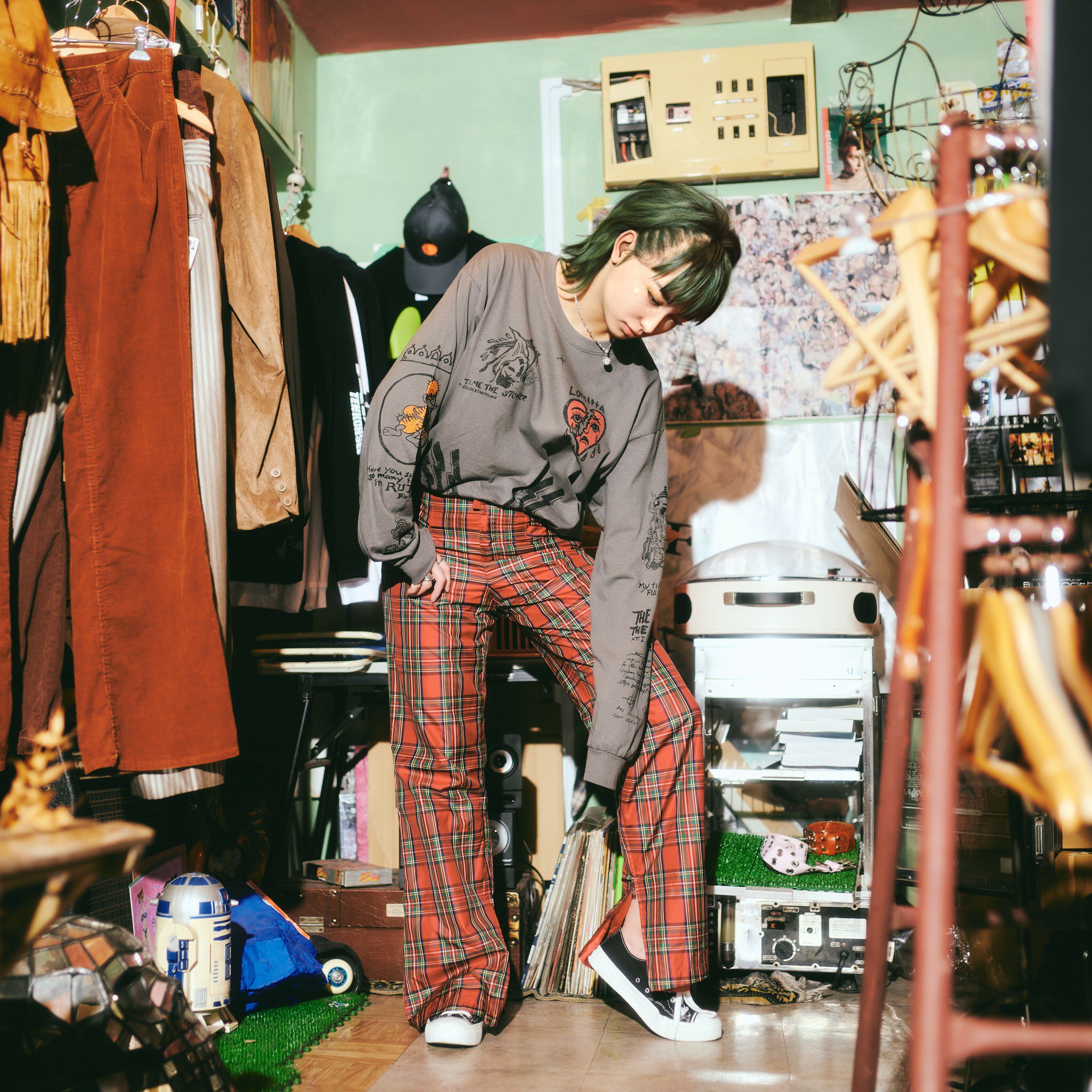
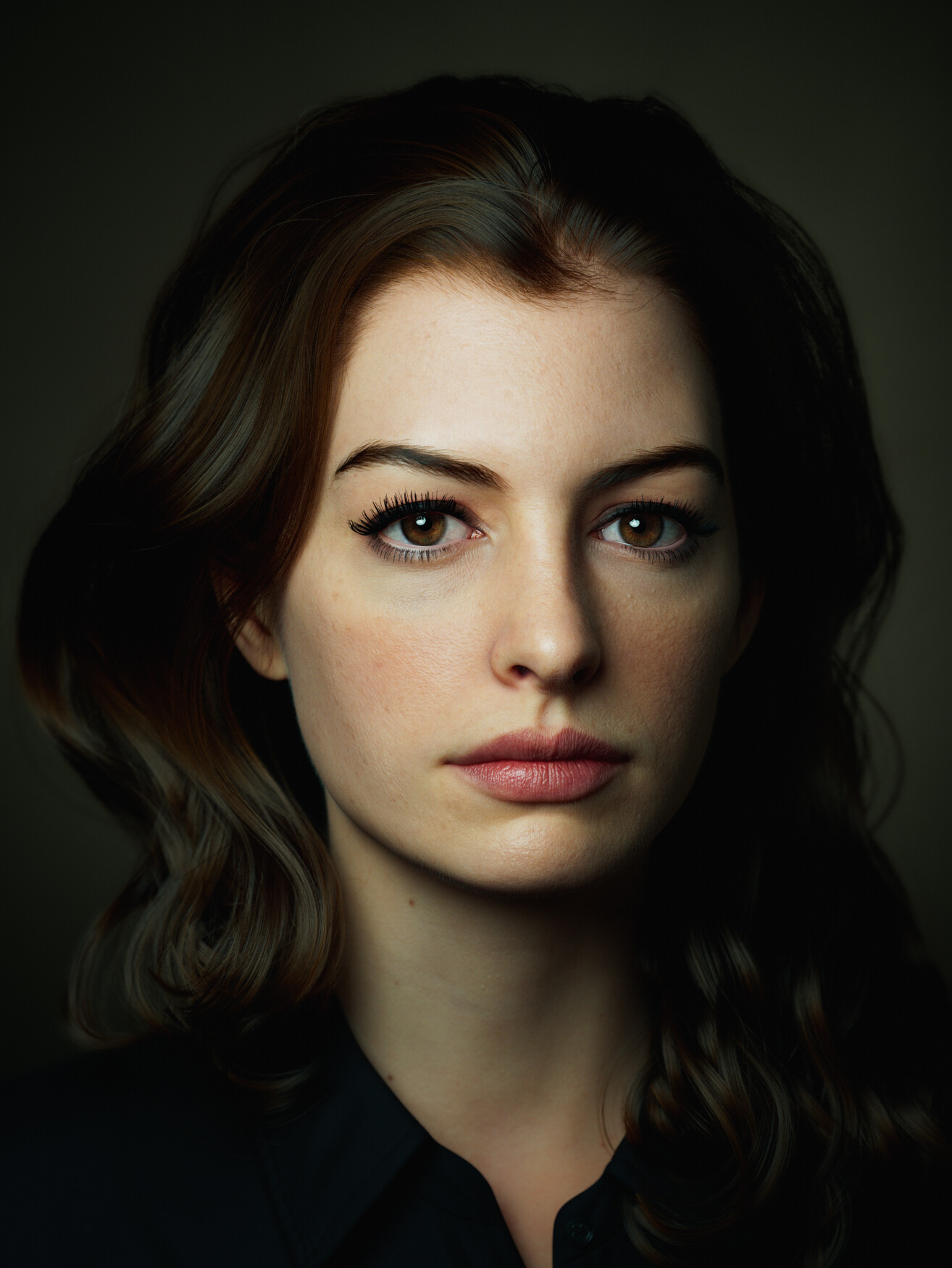
For example, this is what photoreal is to me:
[ source: https://twitter.com/virtual_teresa ]
[ source: https://www.artstation.com/hadikarimi ]
These look near indiscernable from the real thing to me. But even so, there might be another artist with a more discerning eye out there, that would say it still needs to be pushed further in order to look real. In my opinion, you need to reach believability before you can reach the photoreal. What's believable might not always be photoreal, but what's photoreal must always be believable.
That's pretty good but, not being too picky, why would her fringe (US bangs) not be hanging forward while her head is inclined?... why would the back of her hair not follow gravity?...the hair problem previously mentioned. What happened to her left hand? Working in 3D makes us super-critical when there's no need to be because it's a really fine image just with some faults. Just overlook them I say.... who cares?
LOTS of hairspray. lol :P
Obviously, it's in her sleeve. o.O
To me, the top one looks like a photo. It might be one of those "virtual models" where they superimpose a 3D model's face upon a photo of a real person or in a real environment. Whatever their method, the image looks pretty real, imo.
The fringe does need work, but as for the "missing" left hand is that she's wearing an oversized pullover. The sleeve that's hanging straight down is going to hide her hand, whereas the right sleeve doesn't because her arm is folded.
Try to keep an open mind. You might not be striving for photoreal, as a lot of people usually don't, but that doesn't mean that no one wants to. If you want people to be cool with non-photorealistic pursuits, then you should show the same courtesy toward people who prefer photorealism. People should be free to pursue it if they want, and they should be free to make threads about it to discuss with other like-minded individuals. It doesn't help the interested being told that their artistic pursuits are pointless, and that they shouldn't bother.
I'm still waiting for someone to come up with a way to take all my photographs and make them look like a render. That would be easier than spending time and effort in setting up scenes and fiddling with surfaces and lighting and whatnot, then waiting for the image to render. I could then fool everyone into thinking that I had produced these wonderful renders, which in fact were simply photographs.
Hahaha! We're probably not that far off. I've seen some ai do crazy things with photos lately.
...I like the principled shader in Blender however how was the hair for the demo made? Is it strand based? Anyway, sounds like something Iray needs.
Didn't watch much of the first first one when I saw it was well over an hour long and it was getting late where I am.
100 000 hairs in Carrara is not hard
..well I've been working with the Strand Based hair generator in Daz, but it would have ot be transferred to Blender as a .obj which means lots of polys..
Yes, the hair in that demo is strand based. Iray has come very far as a render engine, but NVidia doesn't give it as much love and attention as it needs in order to compete against other renderers (this includes Cycles too). Iray should focus on updating their shading algorithms for organics and push that out as a massive update, imo.

As for the first two videos regarding Johan's method to hair cards, it really is very long but only because he goes into great detail about his approach to creating realistic hairstyles using cards. If you're interested in that, I would give it a watch.
If not, I do know of a really nice tutorial on creating strand based hair in blender:
It's a bit outdated, but it's one of the better tutorials I've seen so far.
That is also a very good point, by default, our renders are perfectly sharp, while in reality, even our eyes don't, and our brain fills in a lot of details.
Till a few years ago, my eyes were good enough that I could read a newspaper at about 4 meter distance (insane, I know). But, at the same time, I actually couldn't. It was a matter of my brain recognizing enough of the general shapes of the letters, combined with knowing the context (from the title above an article), that it could "complete the garble". That same thing happens when we look at a persons' face. We see parts of the dimples, parts of the fuzzhairs, and our brain connects the dots and fills in the missing details, either from memory or through extra- and interpolation. When the details are sharp enough to be discernable, our mind doesn't object to the information, it already had expectations that it was there.
But, things seem to go different when part of the image requires our brain to fill in the details, and another part presents them perfectly, which is exactly what happens when combining a render with a photograph. Our mind is almost at rest when watching the rendered part, and suddenly has to work overtime when watching the photograph component. Hard edges or outlines where the render meets the photo probably don't help either. Our brain probably expects something slightly more fuzzy there. So, it makes sense that using DOF and some lense and camera setting related to it should help blending the two much better already.
well the second part is clearly true based on the first part.
As a woman, one of the biggest barriers to photorealism is the breasts. Seriously, the guys creating the 3d models need to realize not all girls are a D cup! LOL. As a member of the itty-bitty-titty-commity, I'd like to see some models with regular A or B cups. Also, breasts are not always perfectly round. They aren't balloons for cryng out loud. But also better hair and teeth would go a long way.
Great point about breasts. Similarly, many healthy and in-shape men do not have six pack abs.
or DAZmanboobs
When trying to say the same in previous threads, most of the comments from both (assumed) genders have practically been claiming the opposite
But do you really think somebody would cite large breasts on a woman, or lack of breasts on a man, as proof that a picture is computer generated?
I think I didn't ask the question clearly. I mean if I were to post a non-CG camera picture of a very large breasted woman, or a man with no breasts, would people assume the pictures were computer generated?
Well, we've come to boob size again. That's more a matter of general realism, rather than photorealism, though, isn't it?
Anyway, according to this, the average cup size of American women is, in fact, DD. That's not to say that they're filled with helium.
Source: https://worldpopulationreview.com/country-rankings/average-breast-size-by-country
You're right about that. You can photoshop a person in the most hideous way, and it would still be a photo. I do have a problem with the usage of the term "photorealism" because of that exactly. Based on the questions OP had asked, I'm going to assume that they're wanting to create realistic models, which we now call "digital humans." It's very different from "photoreal" because it focuses on pushing the details in a model as far as possible, rather than the rendering of the model itself. You can have a digital human and not have your render look like a typical photo, or you can, and the model would still look like a real person.
It's a difficult thing to attempt, but it's doable. And like I told someone else here before, try to keep an open mind. Just because it's not something you would go for, or others would care for, doesn't mean it's not worth pursuing or discussing.
I suspect a lot of the reason for those larger sizes for the US and others comes down to average weight as well as genetic factors. Woman who are obese tend to have bigger breasts, hence pushing up the cup average in any country which is above average in weight.
Since DAZ females tend to be on the skinny side, then they should probably not be walking round with D cups (or bigger).
I would also like to add that realism isn't so much about breast size as it is about how gravity affects the breasts. The larger the breasts, the heavier they are. The heavier the breasts, the lower they tend to hang on a ribcage. As a busty woman, I can confirm. This isn't something I would post here, because it does have nudity in it (even if it's just hand drawn). It's a drawing tutorial, but it does explain how breasts work. So, click at your own peril.
Natural breasts aren't perfectly spherical, but breasts with silicon implants are. I've seen both on real people, so technically both can be considered realistic. It's all dependent on the type of model you want to create. You would never see fake breasts on a girl-next-door type, but you would see them on a p*rn star acting as a girl-next-door. Context matters.
This breast matter will be settled when Cyberpunk is released and we all have bionic boobs. But for now, I think part of the problem is there is not a lot of input in the discussion from people who aren't creating CG images. The first time I showed my father an image I rendered, he seemed quite surprised to find it was generated by a computer. After he was aware of what I was doing, he seemed to think every image I rendered was obviously fake. On the other hand, I showed a friend of mine some images I thought came out fairly well and she immediately said they look like the people from The Sims. But I hadn't put forth any effort in posing them or making them have facial expression.
Very interesting observation. I've seen that too. My guess is that people who have been more exposed to CG, whether from movies or games, have a much easier time spotting the difference between a 3d model and a real person. It's why I constantly hear outsiders crapping on a movie/game for having "bad cg." On the opposite end, you have people who aren't as exposed to it and are unable to spot the difference, no matter how realistic or unrealistic the model actually is. I also went through this when I first saw Shrek. It was my first time being exposed to 3d models of that style. I had a very hard time coming to a conclusion of whether or not Fiona was real. Part of me said she's real and I've seen her somewhere before, but another part of me reminded me that she's just a digital model. The more I spent watching movies and games, the easier it became for me to tell the difference.
It's a blessing and a curse for some of us, because the era of people unexposed to cg constantly is slowly dying. That means that artists in pursuit of realism have to work harder to reach near-indiscernability in their renders. Thankfully proceduralism, automation, and more accurate research papers are here to help.