Drawing DzViewTool
 Omniflux
Posts: 442
Omniflux
Posts: 442
Does anyone have a DzViewTool draw method they could share, or can walk me through creating one?
The SDK sample just calls DzTransformTool::draw()
I can draw, but I don't know how to scale it correctly so it is always the same size regardless of viewport and camera, and I suspect I'm going about it completely wrong....
DAZ Studio Rotate Tool (blue circle always the same size)
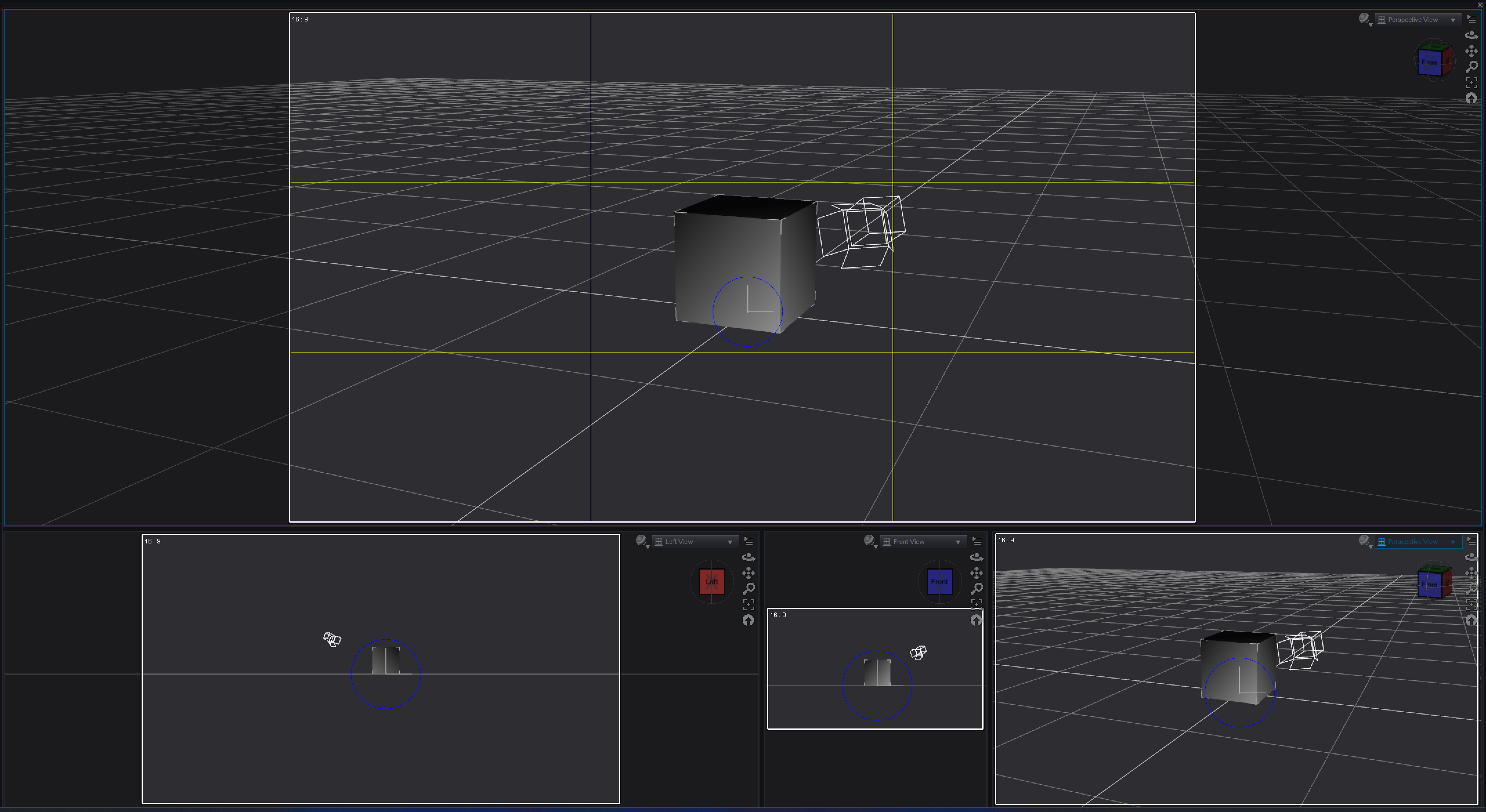
My attempt (yellow dot, various sizes)
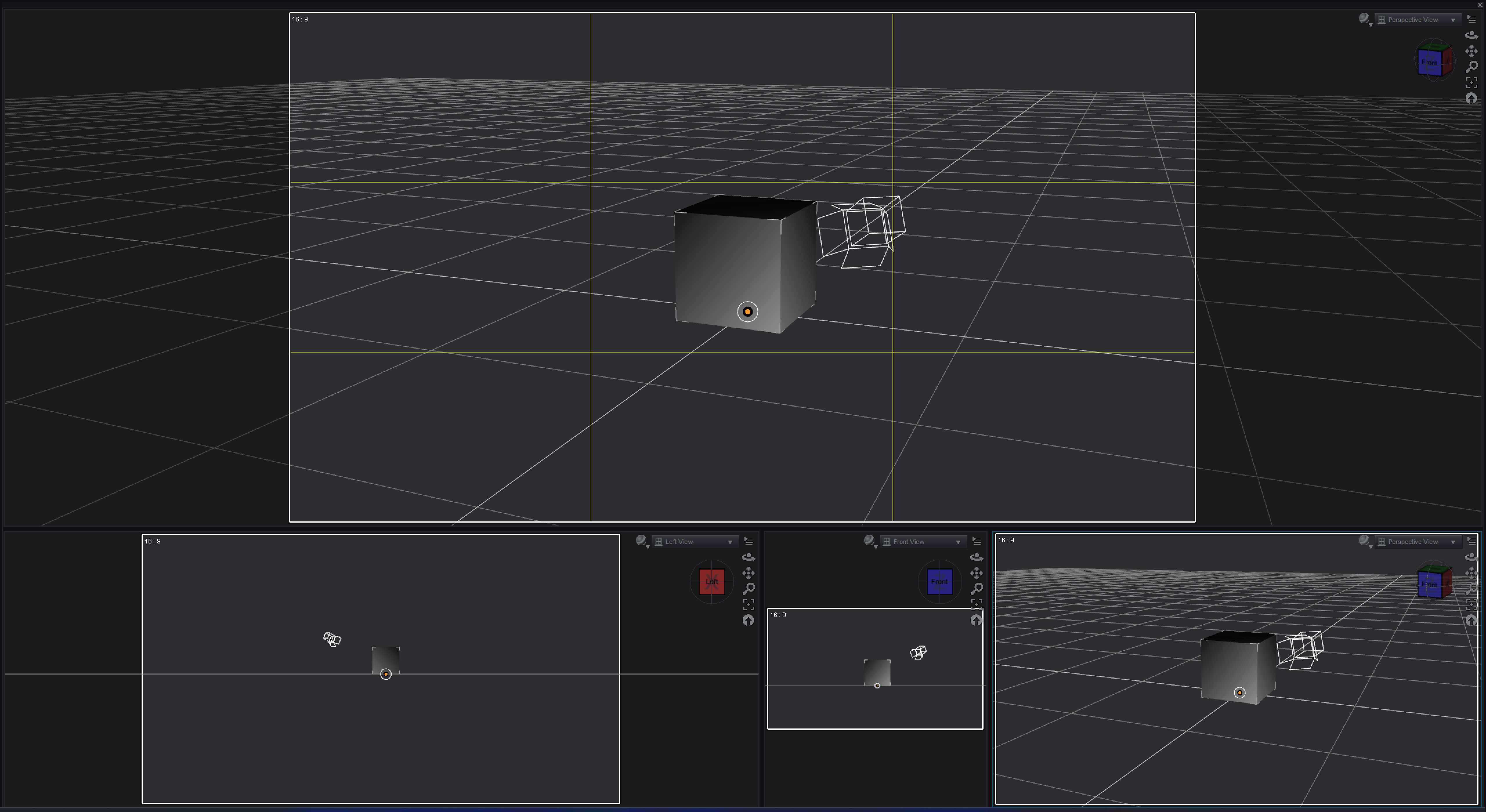
I suspect I'm completely off track with the scaling I'm doing here, and should not be doing different things for different camera types...
void MyViewTool::draw(const DzDrawStyle& style, Dz3DViewport* view) const
{
	// Don't show in renders
	if (style.drawObjectsOnly())
	{
		return;
	}

	const auto innerRadius = 0.01f;
	const auto middleRadius = 0.02f;
	const auto outerRadius = 0.04f;
	const auto numTriangles = 20;

	const auto cam = view->getCamera();

	// Save state & setup environment
	glPushAttrib(GL_ENABLE_BIT);
	glDisable(GL_LIGHTING);
	glDisable(GL_DEPTH_TEST);

	glPushMatrix();

	// Set drawing origin
	DzVec3 wsPos;
	glTranslatef(wsPos[0], wsPos[1], wsPos[2]);	// 0,0,0 for testing

	// Rotate to match viewport
	DzVec3 axis;
	float angle;
	cam->getWSRot().getValue(axis, angle);
	glRotatef((-angle * DZ_FLT_RAD_TO_DEG), axis[0], axis[1], axis[2]);

	// Scale to match viewport
	auto scale = DzMatrix4::identity();

	// =========================== BEGIN CONFUSION ============================

	// TODO Still missing something... changing horizontal viewport width changes size still
	if (auto basicCamera = qobject_cast<DzBasicCamera*>(cam))
	{
		// For Perspective cameras
		if (basicCamera->isPerspective())
		{
			// Scale for camera distance
			scale.scale((cam->getWSPos() - wsPos).length());

			// Scale for FoV
			scale.scale(std::tan(cam->getFieldOfView() / 2));
		}
		// For Orthographic cameras
		else
		{
			// Scale for camera zoom
			scale.scale(cam->getFocalDistance());

			// From observation. But why 34 to match perspective instead of 35 or 36? Wrong formula?
			auto const frameWidth = 34;
			scale.scale(frameWidth / (2 * cam->getFocalLength()));
		}
	}
	else
	{
		if (auto spotLight = qobject_cast<DzSpotLight*>(cam))
		{
			// Scale for camera distance from origin
			scale.scale((cam->getWSPos() - wsPos).length());

			// TODO need to scale on additional value still
			//scale.scale(std::tan(cam->getFieldOfView() / 2));
		}
		else
		{
			dzApp->debug(QString("Need to scale for FoV for: '%1', Type: %2, Class: %3").arg(cam->getLabel()).arg(cam->getType()).arg(cam->className()));
		}
	}

	// ============================ END CONFUSION =============================

	glMultMatrixf(scale);

	// Draw widget

	// Outer circle
	glBegin(GL_LINE_LOOP);

	glColor3ub(255, 255, 255);	// White

	for (auto i = 0; i <= numTriangles; i++) {
		auto theta = i * DZ_FLT_2_PI / numTriangles;

		glVertex2f((outerRadius * std::cos(theta)), (outerRadius * std::sin(theta)));
	}

	glEnd();

	// Middle circle
	glBegin(GL_TRIANGLE_FAN);

	glColor3ub(0, 0, 0);	// Black

	glVertex2f(0, 0);
	for (auto i = 0; i <= numTriangles; i++) {
		auto theta = i * DZ_FLT_2_PI / numTriangles;

		glVertex2f((middleRadius * std::cos(theta)), (middleRadius * std::sin(theta)));
	}

	glEnd();

	// Inner circle
	glBegin(GL_TRIANGLE_FAN);

	glColor3ub(255, 159, 44);	// Orange

	glVertex2f(0, 0);
	for (auto i = 0; i <= numTriangles; i++) {
		auto theta = i * DZ_FLT_2_PI / numTriangles;

		glVertex2f((innerRadius * std::cos(theta)), (innerRadius * std::sin(theta)));
	}

	glEnd();

	// Restore environment
	glPopMatrix();
	glPopAttrib();
}
Maybe I shouldn't be rotating and scaling at all, but multiplying by a matrix I can't figure out?

Daz 3D is part of 
Connect
DAZ Productions, Inc.
7533 S Center View Ct #4664
West Jordan, UT 84084
Licensing Agreement | Terms of Service | Privacy Policy | EULA
© 2026 Daz Productions Inc. All Rights Reserved.
Comments
This might be of interest https://www.daz3d.com/forums/discussion/comment/563046/#Comment_563046 i.e. invoking 2D draw calls on a canvas on top of the 3dViewport
We are told that in the next major version of DS the Viewport drawing is completely rewritten/rearchitected so be aware that this is an area that is likely to need revisiting in your own code if you do implement something.
Thanks, surreal, QGLWidget does some things with overlays which sounds promising, and even better because I do not really want to draw from a DzViewTool, but I didn't see any other ways to draw in the viewport without placing a node in the scene, which I also didn't want to do. ***** 5 stars, went above and beyond, fast delivery. Would purchase ask advice from again.
Richard, I do appreciate the notice, though, I expected as much when I began looking into this and everything I looked at said this method of using OpenGL is deprecated (it is how the SDK sample DzBlackHole draws), use the new method instead.
As suspected, I was going about it completely wrong by dealing with the cameras at all. Here is something that appears to work (although may still not be the correct way...)
// Project world space point to viewport window point
bool MyViewTool::project(const std::array<GLint, 4>& viewport, const DzVec3& src, DzPnt3& dst) const
{
	std::array<GLfloat, 4 * 4> projection;
	std::array<GLfloat, 4 * 4> modelView;

	glGetFloatv(GL_MODELVIEW_MATRIX, modelView.data());
	glGetFloatv(GL_PROJECTION_MATRIX, projection.data());

	auto pos = DzMatrix4(projection.data()).multVecMatrix(DzMatrix4(modelView.data()).multVecMatrix(src));

	if (pos.m_w == 0)
		return false;

	pos = pos / pos.m_w / 2 + 0.5;
	pos.m_x = pos.m_x * viewport[2] + viewport[0];
	pos.m_y = pos.m_y * viewport[3] + viewport[1];

	pos.getValue(dst);

	return true;
}

void MyViewTool::draw(const DzDrawStyle& style, Dz3DViewport* view) const
{
	// Don't show in renders
	if (style.drawObjectsOnly())
	{
		return;
	}

	// Get viewport
	std::array<GLint, 4> viewport;
	glGetIntegerv(GL_VIEWPORT, viewport.data());

	// Get drawing origin in world space
	DzVec3 originWS = dzScene->getPrimarySelection() ? dzScene->getPrimarySelection()->getWSPos() : DzVec3::zero(); // TODO - Testing value

	// Get drawing origin in viewport window
	DzPnt3 originVW;
	if (this->project(viewport, originWS, originVW))
	{
		// Save state & setup environment
		glPushAttrib(GL_ENABLE_BIT);
		glDisable(GL_LIGHTING);
		glDisable(GL_DEPTH_TEST);

		glMatrixMode(GL_PROJECTION);
		glPushMatrix();
		glLoadIdentity();
		glOrtho(viewport[0], viewport[2], viewport[1], viewport[3], -1, 1);

		glMatrixMode(GL_MODELVIEW);
		glPushMatrix();
		glLoadIdentity();

		// Set drawing origin
		glTranslatef(originVW[0], originVW[1], originVW[2]);

		// Draw
		const auto innerRadius = 2.0f;
		const auto middleRadius = 4.0f;
		const auto outerRadius = 8.0f;
		const auto numTriangles = 12;

		// Outer circle
		glBegin(GL_LINE_LOOP);

		glColor3ub(127, 127, 127);	// Gray

		for (auto i = 0; i <= numTriangles; i++) {
			const auto theta = i * DZ_FLT_2_PI / numTriangles;

			glVertex2f((outerRadius * std::cos(theta)), (outerRadius * std::sin(theta)));
		}

		glEnd();

		// Middle circle
		glBegin(GL_TRIANGLE_FAN);

		glColor3ub(0, 0, 0);	// Black

		glVertex2f(0, 0);
		for (auto i = 0; i <= numTriangles; i++) {
			const auto theta = i * DZ_FLT_2_PI / numTriangles;

			glVertex2f((middleRadius * std::cos(theta)), (middleRadius * std::sin(theta)));
		}

		glEnd();

		// Inner circle
		glBegin(GL_TRIANGLE_FAN);

		glColor3ub(255, 159, 44);	// Orange

		glVertex2f(0, 0);
		for (auto i = 0; i <= numTriangles; i++) {
			const auto theta = i * DZ_FLT_2_PI / numTriangles;

			glVertex2f((innerRadius * std::cos(theta)), (innerRadius * std::sin(theta)));
		}

		glEnd();

		// Restore environment
		glPopMatrix();
		glMatrixMode(GL_PROJECTION);
		glPopMatrix();
		glPopAttrib();
	}
}
Unfortunately, sometimes I get
(mostly, but not only, when camera position equals originWS) when calling multVecMatrix on the projection matrix and I don't understand matrix multiplication well enough to understand why (why a division is occurring in multVecMatrix at all).
I implemented the calculation without using DzMatrix4, which removes the warning, but I'm sure just masks the actual issue...
bool MyViewTool::project(const std::array<GLint, 4>& viewport, const DzVec3& src, DzPnt3& dst) const
{
	boost::numeric::ublas::matrix<GLfloat, boost::numeric::ublas::column_major, boost::numeric::ublas::bounded_array<GLfloat, 4 * 4>> projection(4, 4);
	boost::numeric::ublas::matrix<GLfloat, boost::numeric::ublas::column_major, boost::numeric::ublas::bounded_array<GLfloat, 4 * 4>> modelView(4, 4);
	boost::numeric::ublas::vector<GLfloat, boost::numeric::ublas::bounded_array<GLfloat, 4>> pos(4);

	glGetFloatv(GL_MODELVIEW_MATRIX, modelView.data().begin());
	glGetFloatv(GL_PROJECTION_MATRIX, projection.data().begin());
	std::copy(src.getValue(), src.getValue() + 4, pos.begin());

	pos = boost::numeric::ublas::prod(projection, boost::numeric::ublas::prod<boost::numeric::ublas::vector<GLfloat>>(modelView, pos));

	if (pos[3] == 0)
		return false;

	pos = pos / pos[3] / 2 + boost::numeric::ublas::scalar_vector<GLfloat, boost::numeric::ublas::bounded_array<GLfloat, 4>>(4, 0.5);
	pos[0] = pos[0] * viewport[2] + viewport[0];
	pos[1] = pos[1] * viewport[3] + viewport[1];

	std::copy(pos.cbegin(), pos.cend() - 1, dst);

	return true;
}