Just a small request for the creators of half-timbered houses
 cherpenbeck
Posts: 1,418
cherpenbeck
Posts: 1,418
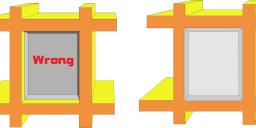
You creators of 3D half-timbered houses are truly awesome. There is just one nifty detail that annoys me. Please, please, try to never let the wood protrude between the plaster. It's the surest way to let it rot the moment it rains because the water gets a chance to stay on the wood. It's always the plaster which protrudes, just take a look at some very old buildings.
This little detail, alongside with timber which is too straight, makes the buildings look fake

Daz 3D is part of 
Connect
DAZ Productions, Inc.
7533 S Center View Ct #4664
West Jordan, UT 84084
Licensing Agreement | Terms of Service | Privacy Policy | EULA
© 2026 Daz Productions Inc. All Rights Reserved.
Comments
Best practice is not always followed, unfortunately.
This mediaeval building in Canterbury (UK) has been around for a good few years and at the front the plaster is set back about 1/2" from the timber surface. At the sides, the plaster is flush. Google Streetview gives this view:
https://www.google.co.uk/maps/@51.2804979,1.0810631,3a,39.6y,257.36h,95.7t/data=!3m6!1e1!3m4!1sknRjxwOWeoT_Zw9L7T6Y4Q!2e0!7i13312!8i6656?hl=en
The refurbishment of the building was done a few years ago under English Heritage (the infuriating people who ensure that old buildings are stuck in time and cannot have any more of the historical overlays that make them so interesting in the first place) oversight, and presumably this is what they insisted upon as being 'authentic'.
[As an aside, English Heritage listed my dad's farm in the late 1980's, and after that its appearance required planning permission to change any detail. The 1590 cob farmhouse was listed with grey 1960's PVC guttering. In 2004 a storm damaged the grey guttering and, as grey had gone out of fashion & was unavailable, he was required to apply for planning permission to replace the grey with black. It took 6 months while he was not permitted to replace the guttering and water was dripping all over the mud wall. He came close to sueing EH officials for 'Misfeasance in Public Office' he was so worried about the walls turning into muddy slurry because of the time they were taking to make a decision.]
Looks like about every second medieval wood and plaster building I've seen here in Germany. Seems housebuilders in olden thymes didn't give as much as a flying eff about "doing it right" or they just used tar to keep the water out of the exposed wood... makes you wonder how these houses can still stand upright after a couple hundred years... well, at least those that weren't bombed to pieces in WWII ^^
I went to Hameln (Hamlyn) once and a German friend told me that every single 'Mediaeval' building around the main square was a re-build after 1945 as the whole lot had been bombed flat & burned out. Then all the buildings were re-built to plans/drawings taken for just that purpose from the 1830's onwards. I was gobsmacked by the depth of planning this showed. And it showed, in relation, how secure we've been in England for centuries.
Compare with Coventry in the UK, also a medieval town bombed flat. There, the post-war town planners did a load more damage than the Luftwaffe ever did.
Yep, same with Plymouth too. A few years ago the city council realised how catastrophically awful the planner's vision in the 1950's/1960's was, and everything I remember from the mid 1980's has been demolished & rebuilt. I've not seen it in person, just by Google Streetview & it looks a lot less horrible.
Try Warsaw, there wasn't any city in Europe flatter than that after WW2. Parts of it look entirely authentic nowadays, probably partly because of the low grade materials used here and there during Soviet times, guaranteeing an aged look within 10 years. Still a big shame that the post-war authorities also placed that most ugly Palace of Culture and Science right next to the old citycenter.
Keep in mind that products are made to make art with, not necessarily be structurally accurate. Anything that can give depth to a wallface will look much better in a render than a flat wall. So even though it may be "correct" to be flat, it will always look much better with depth and shadows breaking it up.
These are things we always have to keep in mind as artists when we make our products.
Flat walls are about the last thing these really old buildings have. Timber works, changes during time, the houses look a bit torn and twisted, sagging in the middle or at the end and so on.
And the plaster isn't just smack on the walls. If made by professionals (not these people today who have NO idea how to repair these old houses the right way), then the plaster will protrude, with diamond-shaped edges, so every drop of water get's a chance to run to the ground as fast as possible.
This video https://www.youtube.com/watch?v=Etd3g8ExrrQ is in German, but I think it shows how it should be made, and it shows the form.