-
Naomi Daz, Naomi Renderos
It's a bit more than "a little fiddly", which is why I said "get your money back".
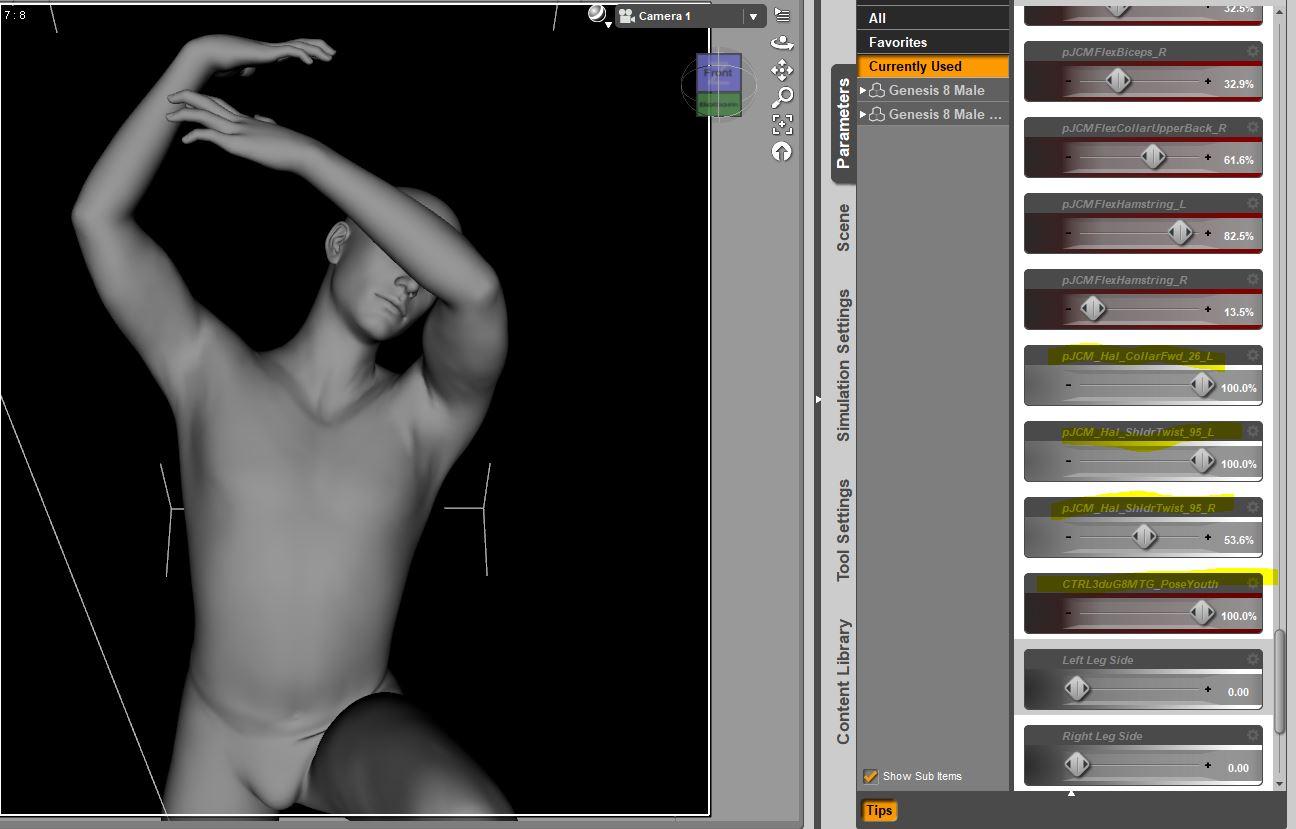
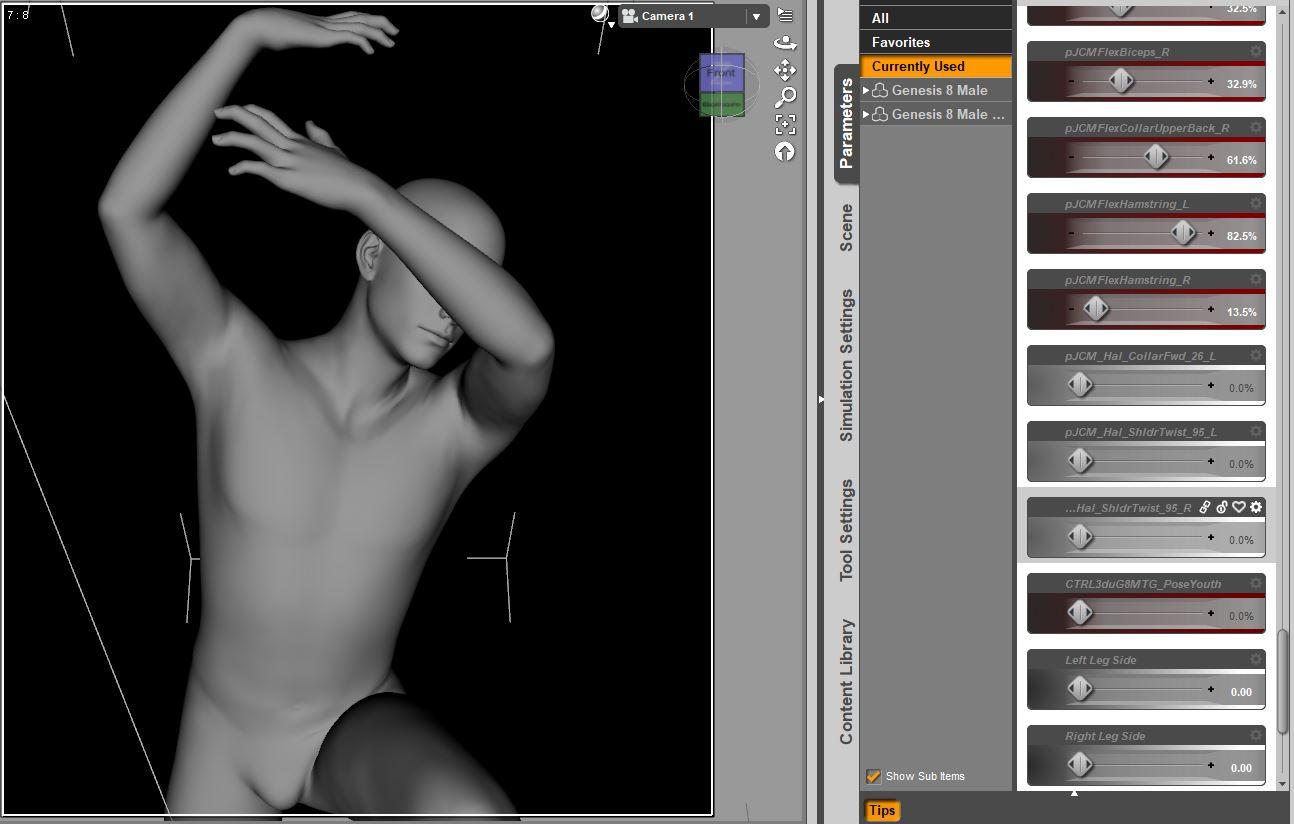
The actual morph asset files can have several hundred instances of the ID, any control dials will also need modified, as will any correctives and JCMs, then we have any character and/or shaping presets, as they will also have the assets ID in them, so it can be quite a list of files needing edited.
NFT and the Future of Digital ContentDeadly Buda said:
Zylox said:
Summary: crypto currency currently uses more than 12x the energy per customer that traditional banking does, and is designed to increase energy use over time.
NFTs do not use bitcoin. So framing NFTs in this energy discussion isn't a accurate representation of the energy situation with NFTs - at all.
As for the article you referred to, it clearly states that bitcoin currently uses 1/4 the power of traditional banks. To just multiply it by the number of people on earth isn't really an accurate way of computing energy use. Less bitcoins are mined over time. Also, I'm not sure that more people means more energy in the sort of 1:1 manner that you surmise. To add to the speculation, computers can run more efficiently with each successive generation of technology, there is no reason they can't make more efficient ASICs just as they make more efficient processors.
Trying to argue that the power consumption of Bitcoin is in any way comparable to that of traditional banking is laughable. (I'm glad Zylox pulled up the numbers so I didn't need to.) So, Bitcoin (which affects at most 2% of the population, since that's how many people own any crypto) is 25% of the energy used by traditional banking (which is used by 100% of people). Or, according to google, 2% of the population consume 0.6% of global electricity to power Bitcoin. Furthermore, it's not as if that energy expenditure covered all the transactions of those 2%, because you can't actually buy most goods or pay bills with crypto, and the majority of those that own crypto actually just hold and don't transact. And even among those that do transact crypto, the number of transactions is probably far less than 10% of the person's total transactions. In summary, with proof of work, if the energy expenditure scaled linearly, then we'd easily exceed the entire world's energy capacity if every transaction used crypto, even at current power levels. And linear scaling is not an unreasonable assumption because, if Bitcoin handled all trade, its market cap would need to be proportionate to the world's GDP/wealth, which means mining would become more profitable, which means more people would mine, which means more energy spent. Linear scaling actually makes a lot of sense.
Now, let's address the (ridiculous) whataboutist claim often made by crypto proponents of "why is the energy used for crypto bad, while [insert any use of a GPU] is considered okay?" I think most people would agree that energy use that creates something or furthers humanity is not a waste, whereas energy that produces nothing is a waste. GPU use, whether for gaming, rendering, or research, all serve a practical purpose: productivity or entertainment. Entertainment is a means of relaxation, which is necessary for people to be productive, so that energy ultimately ends up fueling productivity. Running a while(random() != magicNumber) { /*do nothing*/ } loop in code is the definition of wasted energy, which is exactly what cryptomining is.
Now, you say that NFTs run on Etherium, so we shouldn't compare to Bitcoin. But they're both cryptocurrencies, and they roughly accomplish the same purpose. Hence, promoting one cryptocurrency means collectively promoting them all, and promoting their general acceptance/adoption. This is evidenced by their correlated price trends. If Bitcoin all of a sudden vanished one day, or waned in popularity to Etherium, you can be sure that those who are mining Bitcoin will just swap to Etherium (even if it means they need to buy new hardware), meaning the power consumption of Etherium will skyrocket to the levels that Bitcoin has now.
You say that "there is no reason they can't make more efficient ASICs" for mining in the future. Well, it sounds like you don't even understand how cryptomining works. The mining difficulty scales with computing power in the network, in order to ensure a consistent time between blocks. So if hardware becomes more efficient, then the difficulty will simply increase, and a miner will have twice the amount of computing power (to waste) at the same power expenditure. The limiting factor is always energy cost/capacity and hardware availability, the actual hardware efficiency is irrelevant (except for the miner's personal profits if they have more computing power for the same amount of energy). And as the last 20 years of computer hardware have shown, future generations of hardware prioritize increased performance instead of decreased power consumption.
Finally, let's address the idea of how amazing NFTs are, and how much value they could provide the world as a practical means of authenticating ownership, without a middleman. The fundamental flaw here is the assumption that humans are honest and lack greed (greed, i.e. the very foundation on which NFTs are built on). Due to the anonymous/irreversible nature of crypto transactions, it's easy to scam buyers or sellers, so NFTs can only ever work as a means of selling/trading worthless items (or representations of items) in order to have the honor of holding the title of "owner."
For example, take Daz selling assets via NFT. Nothing stops me from buying the NFT, downloading the asset, and reselling the NFT to someone else, even at the same price. That person can then download the asset, and resell to someone else, and continue the cycle, essentially each person in the chain getting free content, and ripping off Daz, or whoever the seller might have been. Alternatively (or if there's one of those pesky "smart contracts" involved), I can just create an account and sell the asset as if I were the owner. Or if I really wanted, I could create an account and actually just sell nothing: a 404 error.
But how about buying something non-digital, like real property, i.e. something that can't be reproduced? Okay, let's say the title to my home is tied to an NFT. What if a guest hops onto my computer while I'm not looking, and sells the NFT to someone without my permission? Or maybe it happens due to a computer virus. Does that mean I've lost my home? Or was it the buyer that got scammed? Or what if I'm renting out my apartment, and the renter pretends to be the owner, mints a new NFT, and sells the apartment. You can argue that in all these cases, the buyer is responsible for verifying that the seller is an honest person. Well, perhaps for the safety of everyone, there can be an established/trusted account, such as a realtor, and I as the owner can transfer my NFT to them, so that the buyer recognizes the trusted realtor account and knows they're not getting scammed. Okay, so in an effort to save the buyer the time and effort to do their due diligence, and as a means to establish trust for all parties, I've just reintroduced that evil middleman. So in essence, that terrible system that we have now, of laws and middlemen, actually exists in order to solve all the problems plaguing NFTs. Wow, mind blown! Who knew that dishonest people exist!
All that said, I'll be happy to change my perspective on Etherium when it changes to proof of stake, but I'll believe it when I see it. Until then, it's cancer. And regarding NFTs, I'm not opposed to NFTs running on an energy efficient blockchain if they're used to distribute meaningless titles of no real world value outside of being collectible, perhaps with some trivial artwork/asset attached to symbolize the token. But to make the claim that they're useful in any real-world/practical way is, frankly, delusional.
Naomi Daz, Naomi RenderosRichard Haseltine said:
I would say report this to Daz and to the renderosity vendor - one or both could avoid issues by adding a prefix to the morph name. That is soemthing you could do yourself, since it's unlikely that any add-ons will depend on the morphs, but it is a little fiddly and may not match the official fix(es) (which could break your saved scenes) so best to give the makers a chance.
So if I go into the mophs of the products I'm having trouble with I can just add a prefix? The products would still call the right files without me doing anything else? But honestly I'm starting to see all kinds of duplicate issues, So I'm getting fustrated now along with all the missing product preview troubles lately.
Naomi Daz, Naomi RenderosI would say report this to Daz and to the renderosity vendor - one or both could avoid issues by adding a prefix to the morph name. That is soemthing you could do yourself, since it's unlikely that any add-ons will depend on the morphs, but it is a little fiddly and may not match the official fix(es) (which could break your saved scenes) so best to give the makers a chance.
New! Novica & Forum Members Tips & Product Reviews Pt 14Oh, I need that 3DU turtle. I've actually now licenses for 90% of his toon stuff but they are still gaps in games, like turtles. I hope it has a morph to a sea turtle and tortoise/terrapin as well.
I've read the NFTs are already going bust according to the latest metrics. Is that a surprise? Not in the least, but I suppose when you see someone making 69 millions from NFT junk art collection that was more crude Hustler style political cartoons than art; well why not gamble if you don't mind loosing a few hundred dollars in the process.
NFT and the Future of Digital ContentDeadly Buda said:
allenfesler_2df6b6e506 said:
(like your art re-selling and you get 10% of the sale)
How would I know someone resold a NFT I had sold? And if so would there be yet another transfer fee I'd be required to pay in part or in full?
You would know the NFT resold because money went immediately to your crypto wallet. That is the cool thing about NFTs and smart contracts in general. The percentage you get is already programmed into the NFT. So it could re-sell 100 times and you would get your 10% each time. Let's say you sell 100 cover art jpgs for equivalent of $10 each, and the NFT was programmed to give you 10% of each resale. Not including transaction fees (which are only temporarily high on ethereum-based NFTs) you made $1000. Then each one re-sells an average of 3 times over the next two years at double the original price, that's an extra $600 directly to you. You don't have to do anything, the blockchain just validates and executes those percentages when they occur and they are sent to you in minutes if not seconds.
These problems are temporary ...
Maybe I'll look into it again once these temporary problems have been resolved, but for now I think I’ll stick to selling my silly stories on Amazon and using DAZ to make the covers. Sure Amazon gets a piece of the action, but the buyer gets an actual license/copy of the work – not just a link – and they can have it (and I can see a profit) for what they’d pay for a (really bad) cup of coffee from a big chain I won’t name. ;-)
I would give them more than a passing glance, though. You could stand to profit more and do less. It really depends on your workflow and if you feel like learning a new way of doing things. Which, admittedly can be a pain. I'm not doing much with them myself, but I see their usefulness.
Thanks for the examples, it's about money, and the traders profit the most and the artists the least with zero appreciation for the artistic value or the enviroment. I get it can be tempting, but it's not the set of values I'd like to sign up to (Dang it, it's getting philosphical again).
Content Question Timehas been a long time.
i think the v4 ranger had support morphs. look for like waist width, think it had the pregnancy morph in it too. try manually dialing some of those built in morphs.
Daz to Blender - New Bridge Update Ready for Testing@DAZ_sam Ok thank you, we will wait for the next update then. Please note that in blender every single morph takes the whole object geometry. So it is important to optimize the used morphs. Spreading around all the morphs to all the objects, either if they apply or not, may result in a massive memory leak. Especially for HD figures that can easily make use of hundreds of morphs.
NFT and the Future of Digital Contentallenfesler_2df6b6e506 said:
(like your art re-selling and you get 10% of the sale)
How would I know someone resold a NFT I had sold? And if so would there be yet another transfer fee I'd be required to pay in part or in full?
You would know the NFT resold because money went immediately to your crypto wallet. That is the cool thing about NFTs and smart contracts in general. The percentage you get is already programmed into the NFT. So it could re-sell 100 times and you would get your 10% each time. Let's say you sell 100 cover art jpgs for equivalent of $10 each, and the NFT was programmed to give you 10% of each resale. Not including transaction fees (which are only temporarily high on ethereum-based NFTs) you made $1000. Then each one re-sells an average of 3 times over the next two years at double the original price, that's an extra $600 directly to you. You don't have to do anything, the blockchain just validates and executes those percentages when they occur and they are sent to you in minutes if not seconds.
These problems are temporary ...
Maybe I'll look into it again once these temporary problems have been resolved, but for now I think I’ll stick to selling my silly stories on Amazon and using DAZ to make the covers. Sure Amazon gets a piece of the action, but the buyer gets an actual license/copy of the work – not just a link – and they can have it (and I can see a profit) for what they’d pay for a (really bad) cup of coffee from a big chain I won’t name. ;-)
I would give them more than a passing glance, though. You could stand to profit more and do less. It really depends on your workflow and if you feel like learning a new way of doing things. Which, admittedly can be a pain. I'm not doing much with them myself, but I see their usefulness.
NFT and the Future of Digital ContentDeadly Buda said:
allenfesler_2df6b6e506 said:
Confused old fart here ...
For the moment let's not worry about how much energy it takes to make a PoS/PoW 'coin'; I'm more interested in what it will (or won't) do for me as a semi-artist/scifi-writer.
As I semi-understand things, to play this NFT game you have to generate or buy/convert enough cash to whatever coin is needed to make the NFT (well over $100 from what those in the thread were saying).
Then you have to 'sell' the NFT - and there's a transfer fee! (also over $100 I believe someone said).
And then you have to cash out the coin - hoping the value hasn't dropped to a point less than you paid to play this little game. (may be another converter fee?)
So a person has to believe that there's someone else out there willing to pay hundreds of dollars for a 'link' to their art/story - because it will have to sell for hundreds just for you to break even, more if you were hoping to make a profit.
Did I miss something big? Because it looks like the only sure winners are the ones selling the NFTs to the artists and the ones collecting those transfer fees. If the artist doesn't charge enough they lose money, if it doesn't sell they lose money, and the buyer buys proof that they bought proof of a link - which can go down or the contents change at any time.
I know there are a few others out there that remember 'War Games' - where the only winning move is a nice game of chess ... ;-)
What you are missing is that NFTs haven't been properly explained to you. NFTs are basically digital contracts that are unique. The contracts get executed and pay out in the particular cryptocurrency they are part of, and can be programmed to do so in the future based on certain events (like your art re-selling and you get 10% of the sale). So its a contract and payment system all in one.
All the other stuff about marketing, transfer fees, etc. that you mention are only after-effects of some hyped transactions and services. These problems are temporary and just part of the developing nature of the technology. NFTs can potentially replace banks and lawyers to a large degree, giving artists a more streamlined way of getting paid directly from their fans or businesses.
(like your art re-selling and you get 10% of the sale)
How would I know someone resold a NFT I had sold? And if so would there be yet another transfer fee I'd be required to pay in part or in full?
These problems are temporary ...
Maybe I'll look into it again once these temporary problems have been resolved, but for now I think I’ll stick to selling my silly stories on Amazon and using DAZ to make the covers. Sure Amazon gets a piece of the action, but the buyer gets an actual license/copy of the work – not just a link – and they can have it (and I can see a profit) for what they’d pay for a (really bad) cup of coffee from a big chain I won’t name. ;-)
What’s the deal with G8.1?Although I'm not a fan of the morphs Michael 8.1, Cleopatra 8.1, & August 8.1, and I've gambled that we are going to head towards the realism of Torment 8.1's morph (minus his theyness), if there were no new feature other than the Eye Look Automatic switch---which automagically does what was previously tediously difficult to do---the update would be worth it.
NFT and the Future of Digital Contentdroidy001 said:
allenfesler_2df6b6e506 said:
Confused old fart here ...
For the moment let's not worry about how much energy it takes to make a PoS/PoW 'coin'; I'm more interested in what it will (or won't) do for me as a semi-artist/scifi-writer.
As I semi-understand things, to play this NFT game you have to generate or buy/convert enough cash to whatever coin is needed to make the NFT (well over $100 from what those in the thread were saying).
Then you have to 'sell' the NFT - and there's a transfer fee! (also over $100 I believe someone said).
And then you have to cash out the coin - hoping the value hasn't dropped to a point less than you paid to play this little game. (may be another converter fee?)
So a person has to believe that there's someone else out there willing to pay hundreds of dollars for a 'link' to their art/story - because it will have to sell for hundreds just for you to break even, more if you were hoping to make a profit.
Did I miss something big? Because it looks like the only sure winners are the ones selling the NFTs to the artists and the ones collecting those transfer fees. If the artist doesn't charge enough they lose money, if it doesn't sell they lose money, and the buyer buys proof that they bought proof of a link - which can go down or the contents change at any time.
I know there are a few others out there that remember 'War Games' - where the only winning move is a nice game of chess ... ;-)
I think you pretty much nailed it. But I'm no expert, I'm just going on the duck theory....+1
Daz To Blender Bridge 2.1.0 --- NOT Exporting selected Morphs!Hi. I found a working solution. Use the "Daz Studio (1 unit = 1 cm) setting. Click "show individual settings" . Set the scale to 10000% (yes, 10,000)
Load your morph.
Worked for me.
Best of luck!
Real Faces and Bodies for Juan Carlos 8@MimicMolly @DarkStarr42 Here's Ashan, Darius, & Diego (I pre-empted Edward & Landon since you've already purchased Real Faces)
For all renders: default HDR, Environment Dome Rotation 100, Subdivision Level 2, Core Figure Head Morph 100, Cornea Bulge 100
Ashan 8 (Tjark Short Hair)- Andres, Eduardo, Jules, Lucio, Marcus, Matias
Darius 8 (Stylish Hair)- Andres, Eduardo, Jules, Lucio, Marcus, Matias
Diego 8 (Carlos Hair)- Andres, Eduardo, Jules, Lucio, Marcus, Matias
NFT and the Future of Digital Contentallenfesler_2df6b6e506 said:
Confused old fart here ...
For the moment let's not worry about how much energy it takes to make a PoS/PoW 'coin'; I'm more interested in what it will (or won't) do for me as a semi-artist/scifi-writer.
As I semi-understand things, to play this NFT game you have to generate or buy/convert enough cash to whatever coin is needed to make the NFT (well over $100 from what those in the thread were saying).
Then you have to 'sell' the NFT - and there's a transfer fee! (also over $100 I believe someone said).
And then you have to cash out the coin - hoping the value hasn't dropped to a point less than you paid to play this little game. (may be another converter fee?)
So a person has to believe that there's someone else out there willing to pay hundreds of dollars for a 'link' to their art/story - because it will have to sell for hundreds just for you to break even, more if you were hoping to make a profit.
Did I miss something big? Because it looks like the only sure winners are the ones selling the NFTs to the artists and the ones collecting those transfer fees. If the artist doesn't charge enough they lose money, if it doesn't sell they lose money, and the buyer buys proof that they bought proof of a link - which can go down or the contents change at any time.
I know there are a few others out there that remember 'War Games' - where the only winning move is a nice game of chess ... ;-)
What you are missing is that NFTs haven't been properly explained to you. NFTs are basically digital contracts that are unique. The contracts get executed and pay out in the particular cryptocurrency they are part of, and can be programmed to do so in the future based on certain events (like your art re-selling and you get 10% of the sale). So its a contract and payment system all in one.
All the other stuff about marketing, transfer fees, etc. that you mention are only after-effects of some hyped transactions and services. These problems are temporary and just part of the developing nature of the technology. NFTs can potentially replace banks and lawyers to a large degree, giving artists a more streamlined way of getting paid directly from their fans or businesses.
NFT and the Future of Digital Contentallenfesler_2df6b6e506 said:
Confused old fart here ...
For the moment let's not worry about how much energy it takes to make a PoS/PoW 'coin'; I'm more interested in what it will (or won't) do for me as a semi-artist/scifi-writer.
As I semi-understand things, to play this NFT game you have to generate or buy/convert enough cash to whatever coin is needed to make the NFT (well over $100 from what those in the thread were saying).
Then you have to 'sell' the NFT - and there's a transfer fee! (also over $100 I believe someone said).
And then you have to cash out the coin - hoping the value hasn't dropped to a point less than you paid to play this little game. (may be another converter fee?)
So a person has to believe that there's someone else out there willing to pay hundreds of dollars for a 'link' to their art/story - because it will have to sell for hundreds just for you to break even, more if you were hoping to make a profit.
Did I miss something big? Because it looks like the only sure winners are the ones selling the NFTs to the artists and the ones collecting those transfer fees. If the artist doesn't charge enough they lose money, if it doesn't sell they lose money, and the buyer buys proof that they bought proof of a link - which can go down or the contents change at any time.
I know there are a few others out there that remember 'War Games' - where the only winning move is a nice game of chess ... ;-)
That's how I understand it works, too. Some NFT services, such as the one DAZ is moving to, charge a lot less to create and sell the token/NFT. It is still a lot like gambling or speculating on the stock market, if the stock market were completely unregulated. To make it even more exciting, the media are talking about how it looks like the NFT bubble either has or is about to burst. Doesn't mean it will burst, but it does add a further layer of uncertainty.
NFT and the Future of Digital Content
I think you pretty much nailed it. But I'm no expert, I'm just going on the duck theory.allenfesler_2df6b6e506 said:Confused old fart here ...
For the moment let's not worry about how much energy it takes to make a PoS/PoW 'coin'; I'm more interested in what it will (or won't) do for me as a semi-artist/scifi-writer.
As I semi-understand things, to play this NFT game you have to generate or buy/convert enough cash to whatever coin is needed to make the NFT (well over $100 from what those in the thread were saying).
Then you have to 'sell' the NFT - and there's a transfer fee! (also over $100 I believe someone said).
And then you have to cash out the coin - hoping the value hasn't dropped to a point less than you paid to play this little game. (may be another converter fee?)
So a person has to believe that there's someone else out there willing to pay hundreds of dollars for a 'link' to their art/story - because it will have to sell for hundreds just for you to break even, more if you were hoping to make a profit.
Did I miss something big? Because it looks like the only sure winners are the ones selling the NFTs to the artists and the ones collecting those transfer fees. If the artist doesn't charge enough they lose money, if it doesn't sell they lose money, and the buyer buys proof that they bought proof of a link - which can go down or the contents change at any time.
I know there are a few others out there that remember 'War Games' - where the only winning move is a nice game of chess ... ;-)
NFT and the Future of Digital ContentConfused old fart here ...
For the moment let's not worry about how much energy it takes to make a PoS/PoW 'coin'; I'm more interested in what it will (or won't) do for me as a semi-artist/scifi-writer.
As I semi-understand things, to play this NFT game you have to generate or buy/convert enough cash to whatever coin is needed to make the NFT (well over $100 from what those in the thread were saying).
Then you have to 'sell' the NFT - and there's a transfer fee! (also over $100 I believe someone said).
And then you have to cash out the coin - hoping the value hasn't dropped to a point less than you paid to play this little game. (may be another converter fee?)
So a person has to believe that there's someone else out there willing to pay hundreds of dollars for a 'link' to their art/story - because it will have to sell for hundreds just for you to break even, more if you were hoping to make a profit.
Did I miss something big? Because it looks like the only sure winners are the ones selling the NFTs to the artists and the ones collecting those transfer fees. If the artist doesn't charge enough they lose money, if it doesn't sell they lose money, and the buyer buys proof that they bought proof of a link - which can go down or the contents change at any time.
I know there are a few others out there that remember 'War Games' - where the only winning move is a nice game of chess ... ;-)
New! Novica & Forum Members Tips & Product Reviews Pt 14Well, I tried to render Futura Techwear for G8M. Nightmare. It does simulate very smoothly with a cross-armed pose and muscles, but a hair with writing on the forehead only visible in the render, a skin choice that was weird and too dark on the body, too light on the face, and I had put a Sci-Fi city in the background of a window and then forgot to close things not visible! I stopped the render halfway through. Saved it as lesson. I also tried out Variations for G8.1M with the first morph. Presets and sliders available. The face was interesting.
But I did get some Oatmeal and Rum-Raisin Cookies baked today. So not a complete loss.
Oh, for the record, I actually hate 'Hammer' pants, or what I know them as, 'Skater' pants, as my son wore them during his high school years. The crotch gives enough room to crouch down on the skateboard and manuever.
Is There A Plan To Speed Up G8 (and future generations) Loading Times?thenoobducky said:
In other words, if you look at the parameter settings sub-components and controllers you will see that those are fully populated in advance and you cannot change them without reloading the figure.
Under my proposition, those lists would be pretty much totally empty when you load base G8 character and they would only get populated on demand when you activate appropriate top morphs. This is why loading time would be near to instant (if you load from SSD).
Activating morph for the first time would take some extra time, but not that much because only very few files have to be read and parsed in a very straightforward way.
This also allows easy installation of new morphs anytime just in the same way as you install new figures, you just refresh the list, new morphs appear and you can apply them.
Ok yeah I kinda agree this should be the approach but not fully. It need to address the following issues:
1. It should be for advanced user only. Why? Because it will break shaping and posing pane. Being able to find all the poses and shapes applicable for the figure is very useful for a beginner. It is also the quickest way to find things when you want to modify a body part.
2. It doesnt work for dial only shapes or expression. For example Zev0's shape shift are a bunch of shape dials. It is not a character so there is no file to apply it. This goes to reason 3
3. There need to be some way to select contents that should be loaded with base figure. For example, I want the shape shift dial to be populated when I load the base character.
4. This need to be backward compatable with exisitng content. How do you propose to make it backwards compatable with existing contents? At least work with stuff bought via Daz store, custom work is less of a problem.
What you are propossing can already be achieved currently by going around the daz install process and creating virtual file links, but I dont think it is the solution that Daz dev will want to adopt.
1 it does not need to be any different experience for the user just for the content vendor
2 it works fine with all that it would rather have problems to work with nondialable correctors like if you create a custom figure and want to add JCMs for its joints those morphs have no user-initiated sliders and under my system cannot be activated. to work around this problem a single slider has to be added which will turn on all JCM morphs for that figure and that slider has to be set to 100% when you load the figure.
3 shape dials will be always populated for all morphs and you can use any of them anytime that have file just their formulas will be empty until you turn them on
4 this is a big problem and more or less cant be done effectively. one of the solutions is to create morph relationships files automatically however they need to be regenerated every time new content is installed to rebuild all dependencies. For the same reason, it may be not possible to install new content on demand. Current daz architecture was a mistake from the beginning because nobody imagines that thing can get to this point
This is why all this discussion is no more than a theoretical exercise
The more reasonable thing to do at this time may be to implement multithreading for different figures because even if G8 takes a long time to load it is not the only thing that has to be loaded scene can contain hundreds or other props textures and morphs which still need to be loaded and it may even happen that G8 is not even main time waster.
This is what I want implemented first, but in a way that is faster and more convinent than reloading the character. Everything else already be worked around.
I think this can be done with a script or plugin because morphs technically can be loaded on demand. Daz developers just don't want to do that because of the fear to screw up something and because this loading may not always work as intended. maybe there is even some kind of API available to ask Daz to load the morph file?
I see daz can load OBJ morph anytime from the script http://docs.daz3d.com/doku.php/public/software/dazstudio/4/referenceguide/scripting/api_reference/samples/file_io/import_obj_morph_loader_silent/start
But the possible problems here is how Daz will later save that kind of morph? ideally, it will include it into your scene file or it can create another copy of the existing morph file