-
Help With Graphics Style
pwToon can do a similar effect (hold down the cmd key when applying and ignore original textures).
Help with daz pwtoonhttp://elborja.deviantart.com/art/PwToon-try-88437719
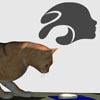
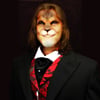
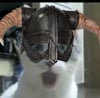
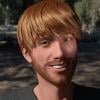
I am trying to get something similar to these but i am struggling with it.
I have pwtoon visual shaders and crescent pwtoon
I refered some tutorials but still cant get desired results.
Can any1 highlight me how to acheive this, what render settings i need. Do i need lights
Thanks
toon lookCrescent celshaders are a presets for pwtoon. It is free, and results are more nice than default pwtoon. Bishounentaurus' Visual Style Shaders maybe. In the image and example of pwtoon with crescent.
My digital comic book composed of DAZ products!daveleitz68 said:galactica1981 said:That's interesting, but I have no idea what you mean by a faux ink technique. Can you elaborate a little more on that?Sure. I opened your third image in GIMP and spent five minutes playing around with filters. My take on your image is by no means what I would do personally. I could spend an hour or two fiddling with settings to get it just right. I wanted to give an idea of what could be possible. You can play around with settings for one image and then batch process the rest with those same settings automatically.
Edit: I forgot to say what filters I used. First, I used 'Curves' to brighten things up a bit. I used the 'Cartoon' filter. I resized the image to be much larger. I used the 'Newsprint' filter. I resized the image back to near original size. That's it.
I think this is a good effect. It helps get the images out of the "uncanny valley" and makes it clear that the flat lighting is a part of the style.
Outlining isn't the only option, either. I note that Experience Anomaly goes for a "painted" style, probably done in postwork. It's a good choice, because it gives a distinctive look to the art and emphasizes the strength of the artist, rather than the limitations of 3D renders. Photoshop has a couple of filters that can apply this sort of effect easily. So does the GIMP, with the advantage that you can script the process so you can have GIMP process all your images in a queue while you go have supper or whatever.
Here's a series of stacked renders I combined into a screen for a video game I've been tinkering with... these use pwToon, no postwork (other than stacking PNG files). (This is a screenshot of the LiveCode development environment-- it was part of an article about coding I was writing at the time.)
My digital comic book composed of DAZ products!zigraphix said:icprncss said:While I know you are using DAZ Studio, you might want to consider looking at this producthttp://www.runtimedna.com/ART-MATERIALS-Vol.1-Cartoon-Shaders.html
DAZ Studio can use pwToon shaders, here in the store, to create very nice toon effects. But there's no reason to insist on toon rendering for a comic book.
Regarding simple lighting, try this setup. It doesn't slow down your render much, and will create a world of difference in your images.
1 - create one distant light. Point it from the direction of the strongest single light source in your scene. If your light source isn't white, change the color of this distant light. Set the intensity of this light to what you think makes sense for the strongest light-- if it's sunlight, put it at about 80%, and angle high, though not straight overhead. If it's a big glowing screen, 30% might be better, from the side. (If it's a small glowing screen, use a spotlight instead.) Indoor ceiling lights in a light environment: 50-60%, straight overhead. Ceiling lights in an environment with dark walls: 80-90%. Turn on shadows for this light. Deep Shadow Map will work well enough for most images.
2 - Add UberEnvironment to the scene. Expand the size of the sphere so it's not in the way of your camera, if needed. Set the intensity to fill in the rest of the lighting in the scene by subtracting the intensity of your distant light from 100, e.g. if your main distant light is at 80%, set UE to 100-80= 20%. You can adjust the color to match the main lighting colors of the rest of the scene, but you don't need to go crazy with image based lighting-- just adding UE will improve the scene tremendously, because lighting in a real scene bounces around and generally doesn't come from just one direction. Set UE quality to 2 or 3 for a test render, set to 4 for your final render. Turn on Ambient Occlusion-- this puts in little shadows where objects are close together. It's amazing how much this helps the realism of your final render.
3 - For any hair in your scene, use UberHair shader and turn off Ambient Occlusion just for the hair. This will make renders much faster.
In general, if you post about a project here at the DAZ forum area, you're going to get critiques of how well you're using the DAZ tools. These will usually be very well thought out, constructive suggestions. If you don't want such suggestions, you could try saying so up front, but it might make more sense to post about your project elsewhere, e.g. in a forum dedicated to comic book art. Then you can see how well that audience reacts to your work, which seems to be what you care more about. I'm not saying don't post here-- just that the kinds of comments you'll get here will be like what you've seen already-- kudos for taking on a large project... and your lighting looks kind of flat, etc. :)
I take note for this. I enjoy with UE default preset from DS4 content since few months ago, with Marieah's contest. The improve in option and quality was big for me. I still need understand how work with this beyond default presets. Now I'm trying with UE using toon shaders and look is interesting.Gilikshe renders: playing with shadersDire Bunny, Gedd and Mamun771601, thanks for your opinions :)
Another thing to work is hair. With new hair type like LAMH and Garibaldi we have now the option to use more dinamic styles. My only problem is the outline part of my shader, this is weak in the hair. PWToon work better, but render time is too much long for a simple toon look. This an example with pwtoon in belovedalia LAMH hair and my own toon shader in the others surface.
My digital comic book composed of DAZ products!icprncss said:While I know you are using DAZ Studio, you might want to consider looking at this producthttp://www.runtimedna.com/ART-MATERIALS-Vol.1-Cartoon-Shaders.html
DAZ Studio can use pwToon shaders, here in the store, to create very nice toon effects. But there's no reason to insist on toon rendering for a comic book.
Regarding simple lighting, try this setup. It doesn't slow down your render much, and will create a world of difference in your images.
1 - create one distant light. Point it from the direction of the strongest single light source in your scene. If your light source isn't white, change the color of this distant light. Set the intensity of this light to what you think makes sense for the strongest light-- if it's sunlight, put it at about 80%, and angle high, though not straight overhead. If it's a big glowing screen, 30% might be better, from the side. (If it's a small glowing screen, use a spotlight instead.) Indoor ceiling lights in a light environment: 50-60%, straight overhead. Ceiling lights in an environment with dark walls: 80-90%. Turn on shadows for this light. Deep Shadow Map will work well enough for most images.
2 - Add UberEnvironment to the scene. Expand the size of the sphere so it's not in the way of your camera, if needed. Set the intensity to fill in the rest of the lighting in the scene by subtracting the intensity of your distant light from 100, e.g. if your main distant light is at 80%, set UE to 100-80= 20%. You can adjust the color to match the main lighting colors of the rest of the scene, but you don't need to go crazy with image based lighting-- just adding UE will improve the scene tremendously, because lighting in a real scene bounces around and generally doesn't come from just one direction. Set UE quality to 2 or 3 for a test render, set to 4 for your final render. Turn on Ambient Occlusion-- this puts in little shadows where objects are close together. It's amazing how much this helps the realism of your final render.
3 - For any hair in your scene, use UberHair shader and turn off Ambient Occlusion just for the hair. This will make renders much faster.
In general, if you post about a project here at the DAZ forum area, you're going to get critiques of how well you're using the DAZ tools. These will usually be very well thought out, constructive suggestions. If you don't want such suggestions, you could try saying so up front, but it might make more sense to post about your project elsewhere, e.g. in a forum dedicated to comic book art. Then you can see how well that audience reacts to your work, which seems to be what you care more about. I'm not saying don't post here-- just that the kinds of comments you'll get here will be like what you've seen already-- kudos for taking on a large project... and your lighting looks kind of flat, etc. :)
How to use pwToon?http://www.poseworks.com/shaders/pwtoon/
You make adjustments to the shader on each of the surfaces.
How to use pwToon?Thanks for helping Richard. But I'm still not getting anywhere.
I want everything in the scene to be Toon shaded.
Where, and what, is the main preset? The character, the pwToon?
If I'm in the Surfaces(Color) tab and click or, or click any single item, I could a really long list of things to edit, none of which is pwToon, and none of which seem to allow ctrl-dbl-click.
Basically, you lost me.
How to use pwToon?pwToon is a shader, and it comes with shader presets that will apply it to anything instead of the material presets you will be used to, which apply certain settings to particular surfaces. Because it isn't tied to a particular set of surfaces on a particular object you have to add an extra step of telling the shader where it should apply itself, which you can do by using the Surface selection tool (Tools menu) to click on the items in your scene or by selecting the figures and props you want to change and then selecting their surfaces in the Surface pane (Window>Panes(tabs)>Surfaces). Once you have everything you want to use pwToon on ctrl-double-click the main preset, then choose Ignore for maps; optionally, next select some surfaces you want to use a particular preset from the resources folder on and do the ctrl-double-click with that. You can adjust settings in the Surfaces pane. When rendering, use the normal option not the toon option - the toon effect is supplied by the shader.
How to use pwToon?Hello,
Warning. Beginner here.
I just bought and installed pwToon but I can't figure out how to use it. I thought it would show up in the Render Style dropdown, but that still is just Default and Cartoon.
I can see pwToon in my Content Library but I'm totally stumped in how to use it. I double-click it and nothing happens.
I try to drag it onto parts of my body. Nothing.
Huh???
Thanks for any help,
Charlie Magee
Like a Phoenix from the Ashes, Who Wants to Render a Superhero?Well, we DO have this...
Use of GPU in DAZdigitalcraft said:Scott-Livingston said:digitalcraft said:Scott-Livingston said:The graphics card has no effect on regular DAZ Studio renders* but a good one will reduce lag when you are doing other things (like loading and manipulating items in your scene).*However, if you're using the Luxus or Reality plug-ins and rendering in LuxRender, the GPU can affect render time, I believe.
I do mostly Toon Shaded Flat tone characters with the help of PWTOON or built-in Toon Shader. I rarely use textures.
Do you think Reality Plug-in is of any help ?I am definitely looking for a way to improve the rendering time. DAZ has beautiful characters, shaders, rendering quality but Rendering Time is a BIG spoiler. It's so difficult to stick to the deadline in this competitive environment with DAZ Renderer.
Any help in this regard is welcome. Somebody suggested to work on the Shading Rate and Bucket Sample. It has helped a bit. But still need faster rendering speed to meet the deadlines.
I'd agree that LuxRender may not be the best choice for you. There are things you can do within the standard 3Delight render engine that will help...shading rate is one of them. More advice from various people can be found in this thread: http://www.daz3d.com/forums/discussion/19384/And if you want to speed up the process of rendering hair (often one of the biggest contributors to a slow render), there's some information on that in my hair tutorial (linked in my sig).
What kind of RealTime Rendering Engine ICLONE uses ? The rendering is so quick !
I love ICLONE rendering speed, but I love DAZ Studio Toon Shader !!!! So difficult to choose.
I think iClone uses OpenGL.
Use of GPU in DAZScott-Livingston said:digitalcraft said:Scott-Livingston said:The graphics card has no effect on regular DAZ Studio renders* but a good one will reduce lag when you are doing other things (like loading and manipulating items in your scene).*However, if you're using the Luxus or Reality plug-ins and rendering in LuxRender, the GPU can affect render time, I believe.
I do mostly Toon Shaded Flat tone characters with the help of PWTOON or built-in Toon Shader. I rarely use textures.
Do you think Reality Plug-in is of any help ?I am definitely looking for a way to improve the rendering time. DAZ has beautiful characters, shaders, rendering quality but Rendering Time is a BIG spoiler. It's so difficult to stick to the deadline in this competitive environment with DAZ Renderer.
Any help in this regard is welcome. Somebody suggested to work on the Shading Rate and Bucket Sample. It has helped a bit. But still need faster rendering speed to meet the deadlines.
I'd agree that LuxRender may not be the best choice for you. There are things you can do within the standard 3Delight render engine that will help...shading rate is one of them. More advice from various people can be found in this thread: http://www.daz3d.com/forums/discussion/19384/And if you want to speed up the process of rendering hair (often one of the biggest contributors to a slow render), there's some information on that in my hair tutorial (linked in my sig).
What kind of RealTime Rendering Engine ICLONE uses ? The rendering is so quick !
I love ICLONE rendering speed, but I love DAZ Studio Toon Shader !!!! So difficult to choose.
Use of GPU in DAZdigitalcraft said:StratDragon said:LuxRender (via Reality, LuxRenderDS or Luxus) is not a speed solution over 3Delight when working in Daz Studio.you could try turning down the setting on your 3Delight panel and experiment. Bucket size is the amount of RAM that is assigned to a core when rendering. if you have two cores with a high bucket size you may experience slightly faster rending however if one of the cores encounters a section that has more computations than the rest of your scene it could get stuck for a while computing the calculations while the other core zips through the rest of the render. A lower bucket size with multiple cores generally gets through this situation faster because the other cores are working smaller areas while one or two cores gets tied down.
keep in mind
Displacements+raytraced shadows = rendering speeds akin to molasses uphill in cold weather.
When light is required to render a shadow you slow down rendering, especially if the shadow is cast over multiple surfaces.When transparency encounters light you slow down rendering (think Hair models, which will get worse if the hair has a displacement)
When light meets a shadow yet to be determined because it's based on a displacement you slow down rendering considerably.
Have you been able to use open GL rendering, its not the best but if you want quick and free that's about as quick and free as it gets.Looks like my ToonShader ( PWTOON ) does not work with OPENGL.
the other stuff will apply and I'm reading Scott's hair tutorial now (good stuff!)
rendering hair is the most common bottleneck in speed on rendering human figures because there are so many calculations involved.Use of GPU in DAZStratDragon said:LuxRender (via Reality, LuxRenderDS or Luxus) is not a speed solution over 3Delight when working in Daz Studio.you could try turning down the setting on your 3Delight panel and experiment. Bucket size is the amount of RAM that is assigned to a core when rendering. if you have two cores with a high bucket size you may experience slightly faster rending however if one of the cores encounters a section that has more computations than the rest of your scene it could get stuck for a while computing the calculations while the other core zips through the rest of the render. A lower bucket size with multiple cores generally gets through this situation faster because the other cores are working smaller areas while one or two cores gets tied down.
keep in mind
Displacements+raytraced shadows = rendering speeds akin to molasses uphill in cold weather.
When light is required to render a shadow you slow down rendering, especially if the shadow is cast over multiple surfaces.When transparency encounters light you slow down rendering (think Hair models, which will get worse if the hair has a displacement)
When light meets a shadow yet to be determined because it's based on a displacement you slow down rendering considerably.
Have you been able to use open GL rendering, its not the best but if you want quick and free that's about as quick and free as it gets.Looks like my ToonShader ( PWTOON ) does not work with OPENGL.
Use of GPU in DAZdigitalcraft said:Scott-Livingston said:The graphics card has no effect on regular DAZ Studio renders* but a good one will reduce lag when you are doing other things (like loading and manipulating items in your scene).*However, if you're using the Luxus or Reality plug-ins and rendering in LuxRender, the GPU can affect render time, I believe.
I do mostly Toon Shaded Flat tone characters with the help of PWTOON or built-in Toon Shader. I rarely use textures.
Do you think Reality Plug-in is of any help ?I am definitely looking for a way to improve the rendering time. DAZ has beautiful characters, shaders, rendering quality but Rendering Time is a BIG spoiler. It's so difficult to stick to the deadline in this competitive environment with DAZ Renderer.
Any help in this regard is welcome. Somebody suggested to work on the Shading Rate and Bucket Sample. It has helped a bit. But still need faster rendering speed to meet the deadlines.
I'd agree that LuxRender may not be the best choice for you. There are things you can do within the standard 3Delight render engine that will help...shading rate is one of them. More advice from various people can be found in this thread: http://www.daz3d.com/forums/discussion/19384/And if you want to speed up the process of rendering hair (often one of the biggest contributors to a slow render), there's some information on that in my hair tutorial (linked in my sig).
Use of GPU in DAZScott-Livingston said:The graphics card has no effect on regular DAZ Studio renders* but a good one will reduce lag when you are doing other things (like loading and manipulating items in your scene).*However, if you're using the Luxus or Reality plug-ins and rendering in LuxRender, the GPU can affect render time, I believe.
I do mostly Toon Shaded Flat tone characters with the help of PWTOON or built-in Toon Shader. I rarely use textures.
Do you think Reality Plug-in is of any help ?I am definitely looking for a way to improve the rendering time. DAZ has beautiful characters, shaders, rendering quality but Rendering Time is a BIG spoiler. It's so difficult to stick to the deadline in this competitive environment with DAZ Renderer.
Any help in this regard is welcome. Somebody suggested to work on the Shading Rate and Bucket Sample. It has helped a bit. But still need faster rendering speed to meet the deadlines.hi quality rendering with low wait times?wancow said:There really isn't a fast way unless you're using Octane or some other nVidia accellerated render engine.You're going to sacrifice quality for speed, or sacrifice speed for quality no matter what you do. Shadow Samples (Low=Fast, High=Slow) and Shading Rate (1=Faster, .1=Slowasmolassess) are the two settings you're going to be working with to speed up render times or quality. Ray Trace Depth affects transparency and reflection. There's no way of getting around that. If you have few or no transparency layers, you can get by with a setting of 2 or 0.
I do mostly Flat Shading ( PWTOON etc.) and I was agvised here to work with the Shading Rate.
It really helped me at the setting Shading Rate = 3. Good speed rendering and medium quality.One-two toonI tend to agree on Toon Pro's renderer. I like using it for handling scenes, then I'll use DAZ Studio's pwToon on my figures and photoshop everything together.
I haven't used YAToon. What do you think of it? I've tried looking around for it but I haven't had any luck finding it.
Daz 3D is part of

Connect
DAZ Productions, Inc.
7533 S Center View Ct #4664
West Jordan, UT 84084Licensing Agreement | Terms of Service | Privacy Policy | EULA
© 2026 Daz Productions Inc. All Rights Reserved.